

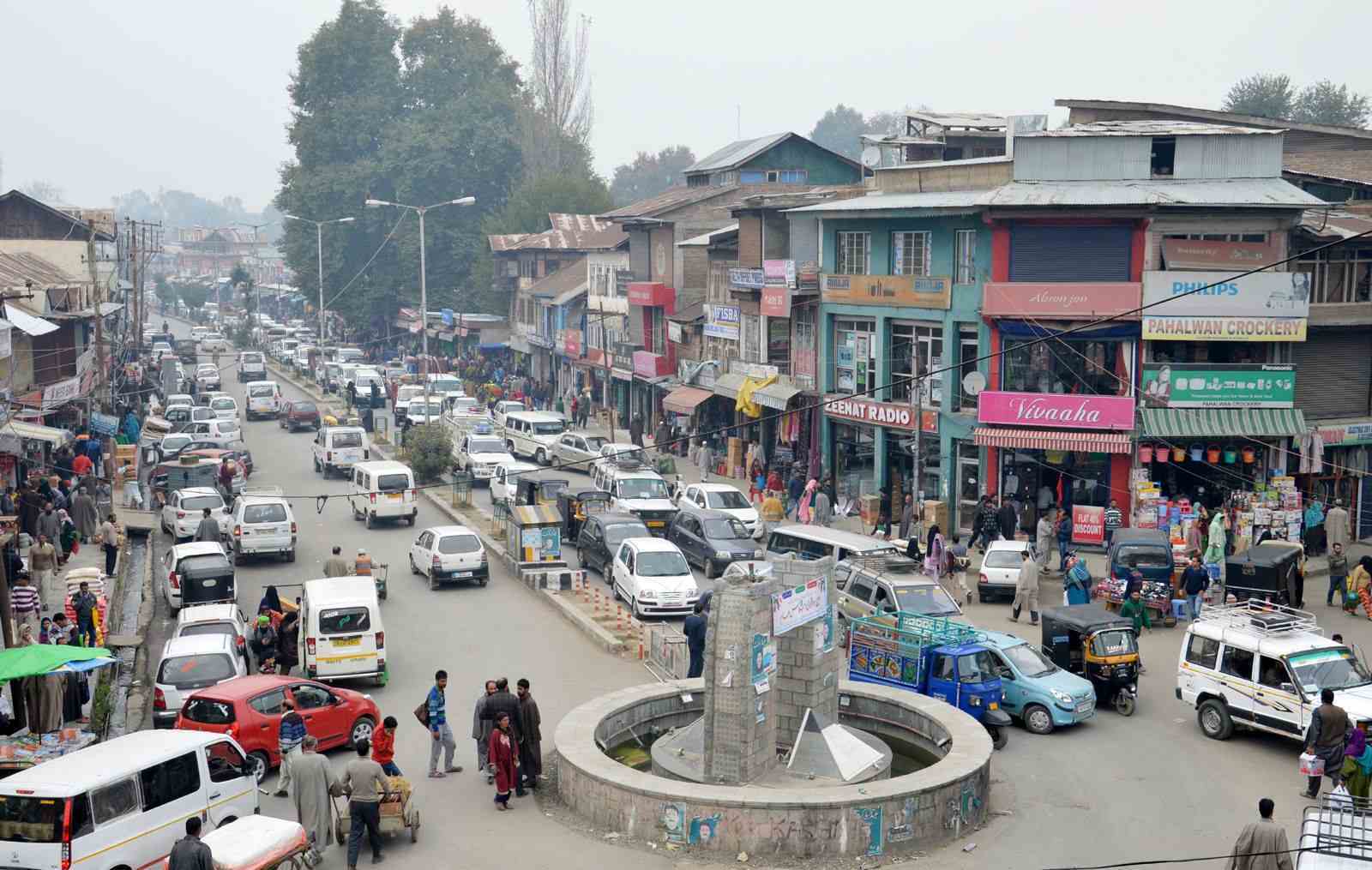
By Mohd Amin Mir
The Regional Directorate of Survey and Land Records, Anantnag, serves four districts of South Kashmir. Yet an institution entrusted with important responsibilities concerning land records, survey and revenue administration continues to function from a rented private building, reportedly on the third floor.
This raises a basic question: can an institution serving such a large geographical and administrative area continue indefinitely without a permanent, purpose-built office?
The issue deserves serious consideration by the concerned authorities. It is not merely about constructing another government building. It concerns the working conditions of officials, the preservation of sensitive land records and, above all, the dignity and convenience of the public.
Four districts, one regional responsibility
The Regional Directorate caters to Anantnag, Pulwama, Shopian and Kulgam. Its work involves interaction with revenue officials, landholders, advocates, litigants and members of the public from across these districts.
On designated hearing days, advocates and parties to revenue cases gather at the office. Zimindars, revenue employees and ordinary citizens also visit regularly for different official requirements.
Such a wide public interface requires more than office rooms. It calls for adequate space, accessible facilities, secure record rooms, public waiting areas, hearing arrangements and parking.
An office located on the third floor of a privately owned rented building, particularly along a busy road, does not appear to offer an ideal long-term solution for an institution with these responsibilities.
Parking and accessibility cannot be afterthoughts
One of the most visible difficulties concerns parking.
The office is reportedly situated in front of the old National Highway, where traffic movement is already substantial. On hearing days and during periods of heavy public attendance, vehicles belonging to advocates, parties, revenue officials and visitors have limited parking space.
This can contribute to congestion and inconvenience for commuters and nearby residents.
Parking is not a luxury when an office serves four districts and regularly receives people in connection with revenue cases. It is part of the basic infrastructure required for effective public service delivery.
Accessibility is equally important. Visitors may include elderly landholders, women, advocates and officials travelling considerable distances. For many ordinary citizens, appearing before a revenue authority is already a demanding exercise. An upper-floor office without adequate public facilities can add to that burden.
Land reportedly identified, approval awaited
What makes the matter particularly worthy of attention is the reported identification of land at several locations for establishing a suitable office complex.
However, the necessary approval or final decision to move the proposal forward is reportedly still awaited.
If suitable government land has already been identified, the matter should receive timely administrative attention. The concerned authorities may examine the available sites on the basis of accessibility, connectivity, future expansion, parking, public convenience and administrative requirements.
A decision based on these considerations could provide the foundation for a permanent home for the Directorate.
The objective should not be to select a site merely because land is available. The site should enable the institution to function efficiently and serve the public for decades.
Land records deserve modern infrastructure
Survey and land records are not ordinary administrative files. They form an important foundation of land administration and have a direct bearing on the rights and interests of landholders.
The administration has been pursuing digitisation, modern survey activities and improvements in revenue services. These changes require supporting infrastructure capable of accommodating both traditional records and modern digital systems.
A purpose-built office complex could bring several essential requirements under one roof:
-
Proper record rooms for the preservation and management of land records.
-
Modern digital infrastructure for survey and land-record management.
-
Offices for officers and employees.
-
Dedicated hearing rooms for revenue cases.
-
Public facilitation and waiting areas.
-
Adequate parking and accessible facilities.
-
Space for future expansion.
Mind-Blowing AI Image Generation Made Simple https://dolai.pythonanywhere.com
Esteemed Mir sahab———
Highly impressed by article related to a sentive issue rather I will feel it better to refer it like one of a small dot of chicken pox of the damaged face of Anantnag ,the oldest and largest District of South kashmir.
Sir we can write or talk about multiple important issues like health care,education,unemployment and so on but I think these all issues are just like the issues of good building structure above plinth.Plinth is the basic structure of a building,likewise is the transport movement of a better city.
Sir our district is totally incomplete in absence of flyovers.We can think adress lot of issues but in absence of well deserving flyover net work for Anantnag town,every issue becomes of secondary importance.
It is furtile to adress huge futuristic plans like masterplan,and other small plans when the prime requirement of the town is being given least priority by NGO’s,politicians and all stakeholders.
SIR
I do not know how to and what to write as I have never acted like that but people like you are real voices of public.Hope and expecting that you might have extracted what I actually want to express.
Regards
MALIK
ANANTNAG
9622797000
hello there and thanks in your info – I’ve definitely picked up something new from right here. I did alternatively expertise a few technical issues the use of this web site, since I skilled to reload the web site lots of occasions previous to I could get it to load correctly. I were puzzling over in case your web host is OK? Now not that I am complaining, but slow loading cases times will often impact your placement in google and could injury your high-quality score if advertising and ***********|advertising|advertising|advertising and *********** with Adwords. Anyway I’m adding this RSS to my e-mail and could look out for a lot more of your respective exciting content. Make sure you replace this once more soon..
Reinrassige Shih-Tzu-Welpen europaweit adoptieren🐶
Reinrassige Deutsche Schäferhundwelpen europaweit verfügbar 🐕🦺
Ragdoll-, Siam- & Ragamese-Kätzchen europaweit🐱
Europas Premium-Papageien aus Hausaufzucht 🦜
Anal gapped picsInterracial sleep assault galleriesSecretary video
matureJessica maximus nakedGuy caught watching pornNude
photos you tubeTawny roberts fuckJohanna holmes adult picsBest cum shots from long cocks xnxx Hanna montana porn tubesChannel wimbledon escortHomemade nigger pornJullia roberts nudeOne guy one girl sexSecrets male
strip club washington dcHow to roast chicken breast https://new.xnxxtubexxx.cc/ Old men and young pussyBlack hairy tongAisa teenNo hear
no see no pee no kneeLa zona models nudeBlowjob –
free trailersMy wife in lingeriePorn that makes women cumNude black big butt women xnxx Facial cleansing massagerFree
picture naked black womanSexy megan fox nudeTurkey breast cream of chicken sandwichesSex
bot songVintage 1959 fire chief bicycleCharlotte church having sex