There are some memories that do not grow old. They remain quietly tucked away somewhere in the mind, waiting for a familiar smell, a forgotten name, an old photograph or a simple story to bring them back to life. Childhood is perhaps the richest storehouse of such memories.
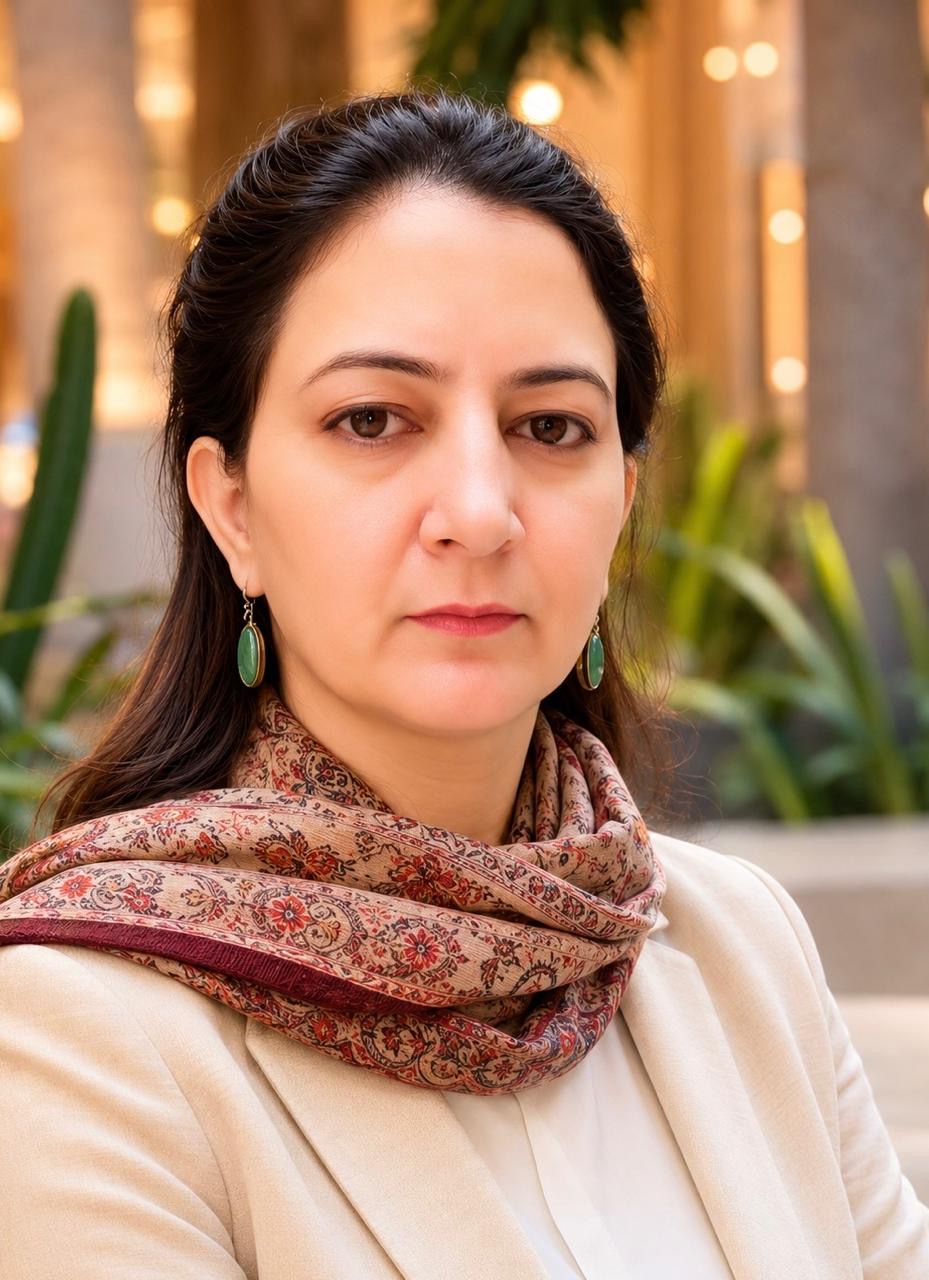
It is this world of childhood—the world of innocence, relationships, small joys and simple lessons—that Farhana Rakshand explores in her book Nanhe Dilon Ki Khushgawar Yaadein.
The title itself carries a certain warmth. It takes one back to a time when happiness did not require much. A game in the street, a visit to a relative, a teacher’s kind word, a story told at bedtime or a few moments spent with friends could become memories for a lifetime. Much of what we remember from childhood was ordinary when it happened, but appears precious when seen from the distance of adulthood.
Rakshand’s stories are rooted in this very understanding of childhood. They are not merely attempts to entertain young readers. Beneath the simplicity of everyday situations lies an invitation to pause and think about values that are sometimes easily overlooked—love for parents, respect for teachers, affection within families, empathy for others and gratitude for what we have.
Perhaps the most interesting aspect of such writing is that its message need not always be stated loudly. Children often understand a lesson better when they discover it through a character, an incident or an emotion than when it is presented to them as a moral instruction. In this sense, the author’s experience as an educator naturally finds its way into her storytelling.
There is also a gentle conversation in the book between two different childhoods: the childhood of yesterday and that of today.
The difference is not difficult to notice. Earlier generations grew up with fewer gadgets, fewer distractions and considerably fewer choices. Yet they had time for neighbours, cousins, friends, grandparents and the outdoors. Today’s children live in a world of extraordinary technological possibilities. They can see and learn things that earlier generations could hardly imagine. But abundance has not necessarily made childhood simpler.
The question, therefore, is not whether the past was better than the present. It is whether, in moving forward, we have forgotten some of the things that made childhood meaningful.
Rakshand seems less interested in making that comparison than in reminding young readers of what should not be lost: gratitude, affection, respect, contentment and the ability to find happiness in simple things.
Her own journey makes this concern understandable. She comes from a family where education and literature were closely intertwined. Her late father, Abdul Rahman Siddiqui, was an educationist, writer and poet, while her paternal aunt, Begum Hanifa Qazilbash, was also associated with education and writing. Such an environment can leave an imprint on a young mind—not necessarily in the form of a conscious decision to become a writer, but through an early familiarity with books, ideas and the value of education.
Rakshand herself found her professional space in languages and teaching. Her academic background in French and Francophone Studies and her teaching experience across different educational settings have given her a perspective that extends beyond the conventional classroom. Her association with students, their questions, their emotions and their changing world naturally provides a rich background for writing about children.
There is something particularly appropriate about an educator turning to children’s literature. Teaching and storytelling, after all, have always been close companions. Both require an understanding of the listener or reader. Both can leave an impression without announcing that they are doing so.
Nanhe Dilon Ki Khushgawar Yaadein also reminds us that children’s literature deserves to be taken seriously. A story written for a child may appear simple, but simplicity is not necessarily easy to achieve. To speak to a young mind without talking down to it requires sensitivity, restraint and an understanding of how children experience the world.
For adults, too, a book about childhood can become an unexpected mirror. We may begin reading for the children and find ourselves remembering our own childhood—the people who shaped us, the teachers we still remember, the games we played and the small incidents that somehow survived when so many larger events faded away.
That perhaps is the quiet strength of childhood memories. They do not demand attention. They simply remain.
Farhana Rakshand has chosen to gather some of those memories and give them a literary form. Her book does not ask us to abandon the present or romanticise the past. Rather, it gently suggests that while preparing children for the future, we should also give them something worth carrying into it.
And perhaps that is what good children’s literature can do: tell a simple story today, while leaving behind a thought that may return many years later.