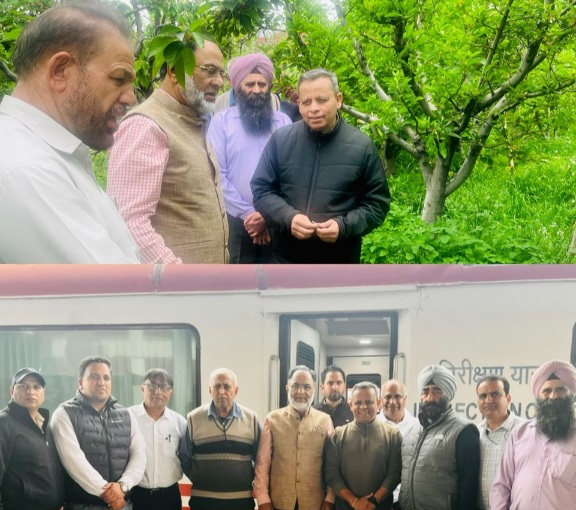
Srinagar, April 28: In a significant push to strengthen rail-based logistics for Kashmir’s horticulture sector, senior officials of Northern Railway held a joint inspection and interaction with fruit growers and traders, discussing a range of measures including introduction of temperature-controlled cargo trains, expansion of loading points, and improved terminal infrastructure.
The high-level engagement took place aboard a specially arranged single-bogie inspection coach, with the joint delegation travelling from Srinagar to Budgam and further along the Srinagar–Baramulla rail section, covering key stations at Pattan, Sopore and Baramulla.
The railway delegation was led by Principal Chief Commercial Manager Parveen Pandey, along with Jaswant Singh, Assistant Commercial Manager Jammu–Srinagar and Syed Tariq, Incharge Srinagar, among other officials. The horticulture trade was represented by Bashir Ahmed Basheer, President of New Kashmir Fruit Association and Chairman of the Kashmir Valley Fruit Growers-cum-Dealers Union, along with senior members of the association.
At the core of the discussions was the need to establish efficient, temperature-controlled cargo systems for seamless transportation of Kashmir’s high-value produce—such as apples, cherries, plums, pears, and walnuts—to markets across India. The initiative also aims to facilitate smoother inbound supply of essential commodities like onions, potatoes, mangoes, and melons into the Valley.
Loading Infrastructure Expansion Proposed
A key outcome of the inspection was the identification of Sopore and Baramulla as priority locations for development of yard-based bulk loading facilities. Additionally, phased development of cargo handling infrastructure was proposed at Anantnag, Awantipora, and Pampore. Operational bottlenecks at Budgam/Srinagar station were also highlighted for early resolution.
Growers and traders flagged persistent challenges faced during the previous loading season, including cumbersome security procedures, restricted access, and delays in handling. The delegation proposed the introduction of modern integrated security systems—such as high-sensitivity scanners and sensor-based monitoring—to reduce manual intervention and expedite cargo movement.
Push for 7-Day Cherry Rail Service
The delegation also took note of the existing Parcel Van (VP) service operated by Northern Railway for cherry consignments from Katra to Mumbai, currently running five days a week. Railway officials indicated that the service is under consideration for expansion to a seven-day schedule, a move seen as crucial for uninterrupted transport of highly perishable produce.
In addition, stakeholders stressed the need to upgrade handling infrastructure at key destination terminals, including Bandra Terminus, Mumbai Central, and Adarsh Nagar Railway Station, to ensure faster unloading and timely dispatch to wholesale markets.
Railways Assure Support
Railway officials gave a detailed hearing to the concerns raised and expressed willingness to introduce refrigerated cargo services, strengthen handling systems, and undertake necessary infrastructure upgrades. The horticulture delegation emphasized that improved railway logistics would significantly enhance efficiency, reduce post-harvest losses, and improve the competitiveness of Kashmir’s fruit industry in national markets.
The joint team also visited orchards in Tangmarg to assess production realities and align logistics planning with ground conditions.
The delegation expressed appreciation to the Ministry of Railways and Union Railway Minister Ashwini Vaishnaw for continued support to the region. Stakeholders also welcomed the improved connectivity brought by the Jammu–Srinagar Vande Bharat Express, noting its positive impact on regional mobility.
The interaction concluded on a constructive note, with railway authorities assuring that all proposals would be examined and appropriate steps taken to strengthen rail-based horticulture logistics in Jammu & Kashmir.