Civil society, educationists say move will boost research, jobs & reduce student migration
Srinagar, April 4: Civil society groups and education stakeholders on Saturday welcomed the passage of the Jammu & Kashmir Private Universities Act Bill, terming it a landmark reform set to transform the region’s higher education landscape and strengthen its knowledge economy.
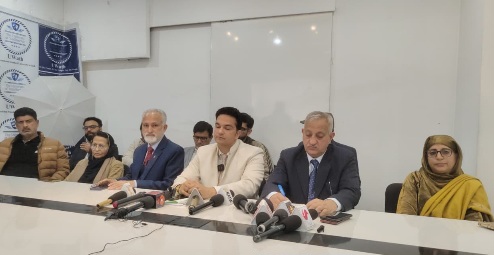
Addressing a press conference here, speakers said the legislation fills a long-standing gap in the private higher education sector and is expected to expand academic opportunities, enhance research capacity and promote innovation across Jammu & Kashmir.
Welcoming the initiative, G. N. Var, Founding President of Private Schools’ Association J&K, lauded the government led by Chief Minister Omar Abdullah and Education Minister Sakeena Itoo for steering the legislation. He termed the Act a historic milestone that would strengthen academic infrastructure, improve quality standards and expand opportunities for students within the region.
Var also acknowledged the role of MLA Farooq Ahmad Shah for supporting the Bill and raising key education-related issues in the Assembly. He said the reform reflects a progressive vision akin to earlier education initiatives of Sheikh Mohammad Abdullah.
Experts and stakeholders highlighted that the Act will introduce a structured regulatory framework ensuring transparency, accountability and academic excellence. Eminent consultant S.P. Qaisar said the legislation would encourage credible institutions to set up campuses in J&K, enhancing competitiveness in higher education.
Founder of WathHarbor Foundation, Mehboob Makhdoomi, described the Act as a progressive step that will help reverse the trend of student migration outside the Union Territory. He noted that the absence of a structured legal framework had forced thousands of students to seek quality education elsewhere, placing financial strain on families.
He said the new law would enable reputed institutions to establish campuses locally, turning universities into hubs of research, innovation and entrepreneurship in emerging fields such as artificial intelligence, data science and sustainability studies. The move, he added, is expected to generate employment, attract investment and contribute to overall socio-economic development.
Industry representatives also backed the move, with Ishfaq Zehgeer of the Kashmir Chamber of Commerce and Industry stating that private universities would drive economic growth, investment and skilled employment. Similar views were echoed by Qazi Touseef of KTMF, who said improved educational infrastructure would strengthen the business ecosystem.
Educationists emphasised that the reform would broaden access to specialised and research-driven courses. Prof Nighat Fatima said stronger academia-industry linkages would enhance practical learning and employability, while Afifa Kamili highlighted the potential for improved research culture through modern facilities and international collaborations.
Socio-environmental expert Touseef Bhat noted that private universities could contribute to policy-oriented research and sustainable development, benefiting the region in the long run.
Welcoming the move from a student perspective, Nasir Khuehami, National Convenor of the Jammu and Kashmir Students Association, said the establishment of private universities would significantly reduce the need for students to migrate outside J&K. He added that local access to quality higher education would ease financial burdens on families and create a more supportive academic environment.
Participants said the passage of the Bill marks the beginning of a transformative phase in higher education in Jammu & Kashmir. They stressed the need for establishing credible, inclusive and high-quality institutions aligned with the region’s long-term educational and economic aspirations.
Civil society members also expressed their commitment to working with policymakers, academia and industry stakeholders to ensure effective implementation of the Act and the development of a transparent, future-ready higher education ecosystem in the region.