In 2007, I stood in the dimly lit corridors of what was then District Hospital Anantnag, watching anxiously as my mother was wheeled into the operation theatre for an eye procedure. I still remember the unease of that moment — not just because surgery always brings fear, but because the surroundings themselves inspired little confidence. The infrastructure appeared fragile. Equipment seemed outdated. The atmosphere reflected a system under strain. It was a hospital functioning under visible constraints.
Seventeen years later, destiny brought me back to the same institution — now transformed into Government Medical College Anantnag. This time, it was my daughter who needed care after fracturing the middle finger of her left hand. I walked in with anxiety, but also curiosity. What I witnessed was not simply a renovated building. It was a transformed healthcare ecosystem.
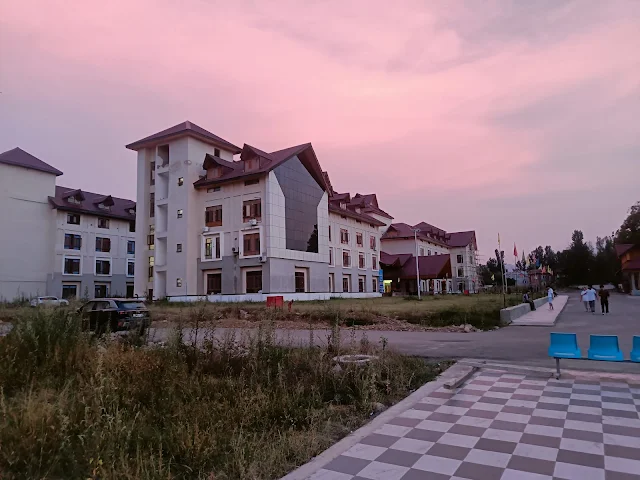
The change was immediate and striking. The campus appeared modern and well-maintained. Departments were clearly marked. Digital registration counters were functioning smoothly. Cleanliness was evident. Waiting halls were spacious and organised. More importantly, the orthopaedic department was equipped with modern surgical tools, skilled specialists, and trained support staff. The procedure was conducted with professionalism comparable to reputed institutions in metropolitan cities.
The magnitude of transformation felt greater than the passage of seventeen years.
When I recall 2007, healthcare in many parts of Jammu and Kashmir was struggling. Specialist doctors were scarce. Diagnostic tools were limited. Referrals to Srinagar were routine, even for manageable cases. Rural patients endured financial and logistical hardships. The district hospital functioned, but barely. Facilities were minimal. Hygiene standards were modest. Overcrowding was common. Conversations with attendants at the time were filled with pessimism. Improvement seemed like a distant dream.
Today, that sentiment has shifted.
The upgradation from a district hospital to a medical college was not merely administrative. A medical college is a hub of learning, research, and specialised care. It attracts qualified professionals. It creates academic discipline. It improves accountability. It raises standards.
The presence of specialists and improved diagnostics has reduced dependency on referrals. Structured management has enhanced efficiency. Nursing and paramedical support systems are stronger. Digitalisation has streamlined registration and record-keeping. Cleanliness — once a concern — is now visibly prioritised.
During my daughter’s stay, I spoke with several attendants. To my surprise, most expressed confidence in the institution. Many said they no longer feel compelled to rush to Srinagar or outside the Union Territory for treatment. Several credited recent governance reforms and leadership under Prime Minister Narendra Modi for prioritising healthcare infrastructure in the region.
Political interpretations may vary, but public confidence has undeniably grown. And confidence is built on visible outcomes.
Healthcare reform requires sustained political will, funding, administrative continuity, and monitoring. Over the years, the establishment of new medical colleges, expansion of district hospitals, recruitment of professionals, introduction of insurance schemes, and modernisation of diagnostics have reshaped the healthcare landscape. In Jammu and Kashmir, decentralising tertiary care through district-level medical colleges has reduced pressure on major hospitals and improved equitable access.
For the poor and marginalised, this transformation matters most. Private healthcare often remains financially inaccessible. A strengthened public system restores dignity and affordability. I observed systematic treatment protocols, responsive staff, and manageable financial burdens compared to private alternatives. Many attendants shared how government-backed insurance schemes eased their financial stress.
The difference between 2007 and today is not just infrastructural. It is psychological. There is greater trust in the system. There is less compulsion to travel long distances. There is assurance.
The presence of a medical college also empowers local youth. It creates opportunities for medical education, employment, and research. It builds long-term institutional capacity.
That said, challenges remain. Super-speciality services need expansion. Continuous training is essential. Infrastructure must be maintained. Rural outreach and preventive healthcare require strengthening. Mental health services demand greater attention. Sustaining reform requires vigilance and accountability.
As someone who has witnessed both eras — as a son in 2007 and a father in 2024 — I cannot ignore the magnitude of change. Seventeen years ago, I stood outside an operating theatre worrying about limited facilities. Today, I sit in a modern ward observing organised, professional care.
History may evaluate leadership through policy and politics. Ordinary citizens evaluate it through lived experience. For families like mine, the transformation is not abstract — it is personal.
The corridors that once echoed with anxiety now reflect structured care and confidence. If the same momentum continues, the future of healthcare in Jammu and Kashmir appears promising.
For countless families, that promise means hope, dignity, and security.
1 COMMENT
Just researching this unique topic and your take
on blouse styles are spot on. Thanks for the detail!


Just researching this unique topic and your take
on blouse styles are spot on. Thanks for the detail!