New Delhi, Feb 1: The Union Budget 2026–27 has proposed a massive public capital expenditure outlay of ₹12.2 lakh crore.
Presenting the Budget in Parliament, Union Finance and Corporate Affairs Minister Nirmala Sitharaman said the government’s foremost priority is to “accelerate and sustain economic growth by enhancing productivity and competitiveness, and building resilience to volatile global dynamics.”
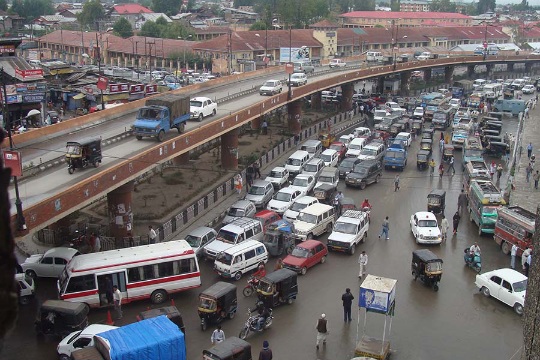
Highlighting the role of cities as engines of growth, the Finance Minister said the focus will now extend to Tier II and Tier III cities, like Srinagar and Jammu, and temple towns that require modern infrastructure and basic amenities. City Economic Regions (CERs) will be mapped based on specific growth drivers, with a proposed allocation of ₹5,000 crore per CER over five years to unlock the economic potential of urban agglomerations.
While Ziraat Times has reached out to officials in the Finance Ministry to ascertain if Srinagar and Jammu could be part of the City Economic Regions initiative, no further details are available until this report was filed.
The Finance Minister noted that public capital expenditure has risen sharply over the past decade—from ₹2 lakh crore in 2014–15 to ₹11.2 lakh crore in Budget Estimates 2025–26—and is now proposed to be increased further to ₹12.2 lakh crore in 2026–27 to maintain growth momentum. She said the government has expanded public infrastructure through innovative financing mechanisms such as Infrastructure Investment Trusts (InVITs), Real Estate Investment Trusts (REITs), and institutions like the National Investment and Infrastructure Fund (NIIF) and NABFID. As part of asset monetisation efforts, the Budget proposes accelerating the recycling of CPSE real estate assets through dedicated REITs.
To bolster private sector participation in infrastructure, the Budget proposes the establishment of an Infrastructure Risk Guarantee Fund. The fund will provide prudently calibrated partial credit guarantees to lenders, aimed at enhancing confidence among private developers during the development and construction phases of infrastructure projects.
The Budget also places strong emphasis on environmentally sustainable movement of cargo. It proposes a new Dedicated Freight Corridor connecting Dankuni in the east to Surat in the west, along with the operationalisation of 20 new National Waterways over the next five years. The initiative will begin with National Waterway-5 in Odisha, linking mineral-rich regions such as Talcher and Angul with industrial hubs like Kalinga Nagar and ports at Paradeep and Dhamra. To increase the share of inland waterways and coastal shipping from 6 per cent to 12 per cent by 2047, a Coastal Cargo Promotion Scheme has been proposed to incentivise modal shift from road and rail.
In addition, training institutes will be developed as Regional Centres of Excellence to build skilled manpower along the waterways, benefiting youth across the regions. A ship repair ecosystem catering to inland waterways is also proposed at Varanasi and Patna.
For sustainable passenger transport, the Finance Minister announced plans to develop seven high-speed rail corridors as growth connectors. These include Mumbai–Pune, Pune–Hyderabad, Hyderabad–Bengaluru, Hyderabad–Chennai, Chennai–Bengaluru, Delhi–Varanasi, and Varanasi–Siliguri.
To improve last-mile and remote connectivity and promote tourism, the Budget proposes incentives to indigenise seaplane manufacturing. A Seaplane Viability Gap Funding (VGF) Scheme will be introduced to support seaplane operations.
Aligning with India’s climate goals, the Budget also announced an outlay of ₹20,000 crore over the next five years for Carbon Capture Utilisation and Storage (CCUS) technologies. The initiative aims to scale up CCUS readiness across five industrial sectors, including power, steel, cement, refineries and chemicals.
The infrastructure-heavy Budget signals continuity in the government’s strategy of leveraging public investment to drive growth, crowd in private capital, and build resilient, sustainable economic systems across the country.