

Ziraat Times Team Report
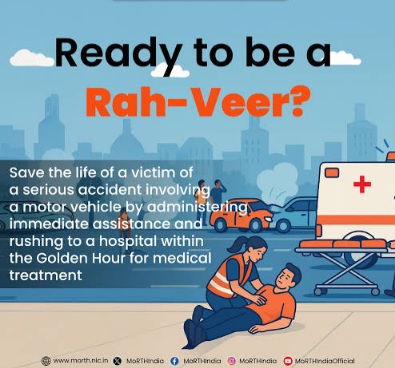
New Delhi, January 4: The Ministry of Road Transport and Highways has reiterated that citizens who help road accident victims during emergencies are fully protected under the law, as it called for greater public participation in saving lives during the critical “Golden Hour” following accidents.
Under the Good Samaritan Rules, notified in 2020 under Section 134A of the Motor Vehicles (Amendment) Act, 2019, individuals who come forward to assist injured persons are shielded from legal, police, and hospital-related harassment. Such helpers are officially recognised as “Rah-Veers”.
According to the Ministry, the Golden Hour — the first hour after a serious injury — is the most crucial window for medical intervention. Timely assistance during this period can significantly reduce fatalities, long-term disabilities, and trauma. The government stressed that no medical training or special equipment is required to be a Rah-Veer, only the willingness to act.
Being a Good Samaritan: What You Should Know – Do’s & Don’ts
Do’s: Your Rights and Responsibilities
-
Do help without fear: You are legally protected from civil or criminal liability when acting in good faith.
-
Do know you can stay anonymous: You are not required to share personal details unless you choose to be a witness.
-
Do allow only one police statement: If you volunteer as a witness, you may be examined once at a time and place convenient to you.
-
Do request a hospital acknowledgement: You are entitled to a simple confirmation that you brought the victim for treatment.
Don’ts: Myths You Shouldn’t Believe
-
Don’t hesitate because of legal concerns: The system is designed to protect Rah-Veers.
-
Don’t feel obligated to remain at the hospital: Once the patient is admitted, you are free to leave.
-
Don’t pay for treatment: Hospitals cannot demand payment from you for emergency care.
-
Don’t feel forced to file an FIR or give evidence: Becoming a witness is your personal choice.
-
Don’t reveal personal details if you prefer anonymity: It is your right.
-
Don’t allow detention by authorities: It is not permitted.