There was a time, not so long ago, when the rhythm of life beat gently in the fields of Shopian. When cherry trees whispered secrets to children and rice paddies echoed with laughter, not machines. When Thajj Kaad was more than agriculture it was kinship in motion, a communion of earth, hands, and hearts.
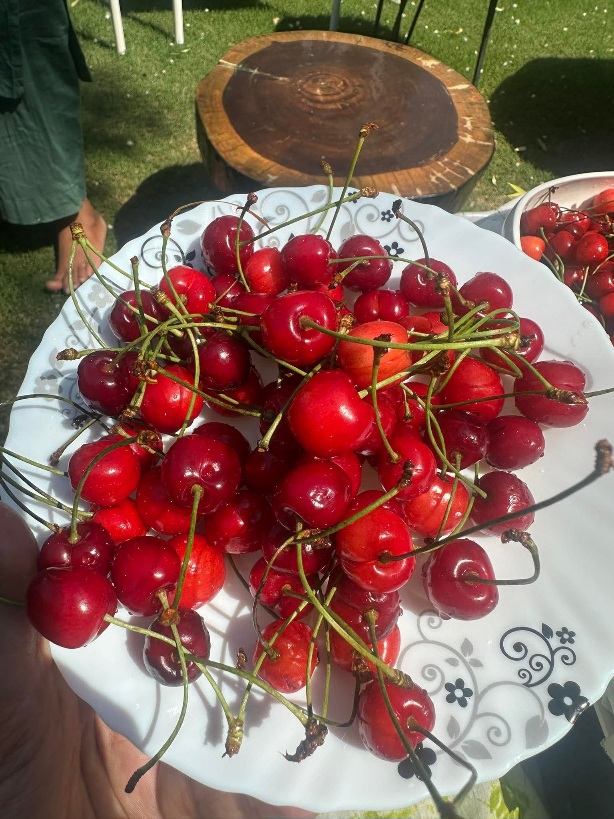
Each season had a soul. When the cherries ripened, their blush wasn’t just a signal of harvest, but an invitation to joy. We climbed those trees not for fruit alone but for freedom. For the thrill of red-stained lips, for the ache of a full belly, for the feeling of sky touching skin.
And when it was time for planting, Thajj Kaad would begin field by field, family by family. It wasn’t duty. It wasn’t toil. It was a gathering of generations. Grandmothers humming old songs. Fathers ankle-deep in water, shoulders glistening in sun. Mothers passing food that tasted of care, not convenience. Children splashing, stealing cherries, chasing tadpoles learning life not through lectures, but through presence.
In those moments, land was not property. It was ancestry. It was memory. It was identity, stitched into the soil.The kadd, the rotating groups of helpers weren’t laborers, they were kin. A community in the truest sense: where one family’s field was everyone’s joy, and no mouth ate alone.
We didn’t know then how rare this was.We didn’t know that one day, children would no longer wait for cherry season, because cherries would come in boxes. That rice would be planted by machines, not by hands singing together. That families would gather less around the soil, and more around screens together, yet apart.We were rich not in wealth, but in belonging.
We were full not in possessions, but in presence.
And though the world has changed, and these seasons may not return as they were, something eternal lingers.
In memory, in soil,


Comments are closed.