Srinagar, October 14: Lieutenant Governor Manoj Sinha has called for urgent action to protect the Himalayan ecosystem, outlining a four-pillar roadmap for sustainable mountain development centred on science-based planning, climate-resilient infrastructure, regenerative livelihoods and a zero-waste economy.
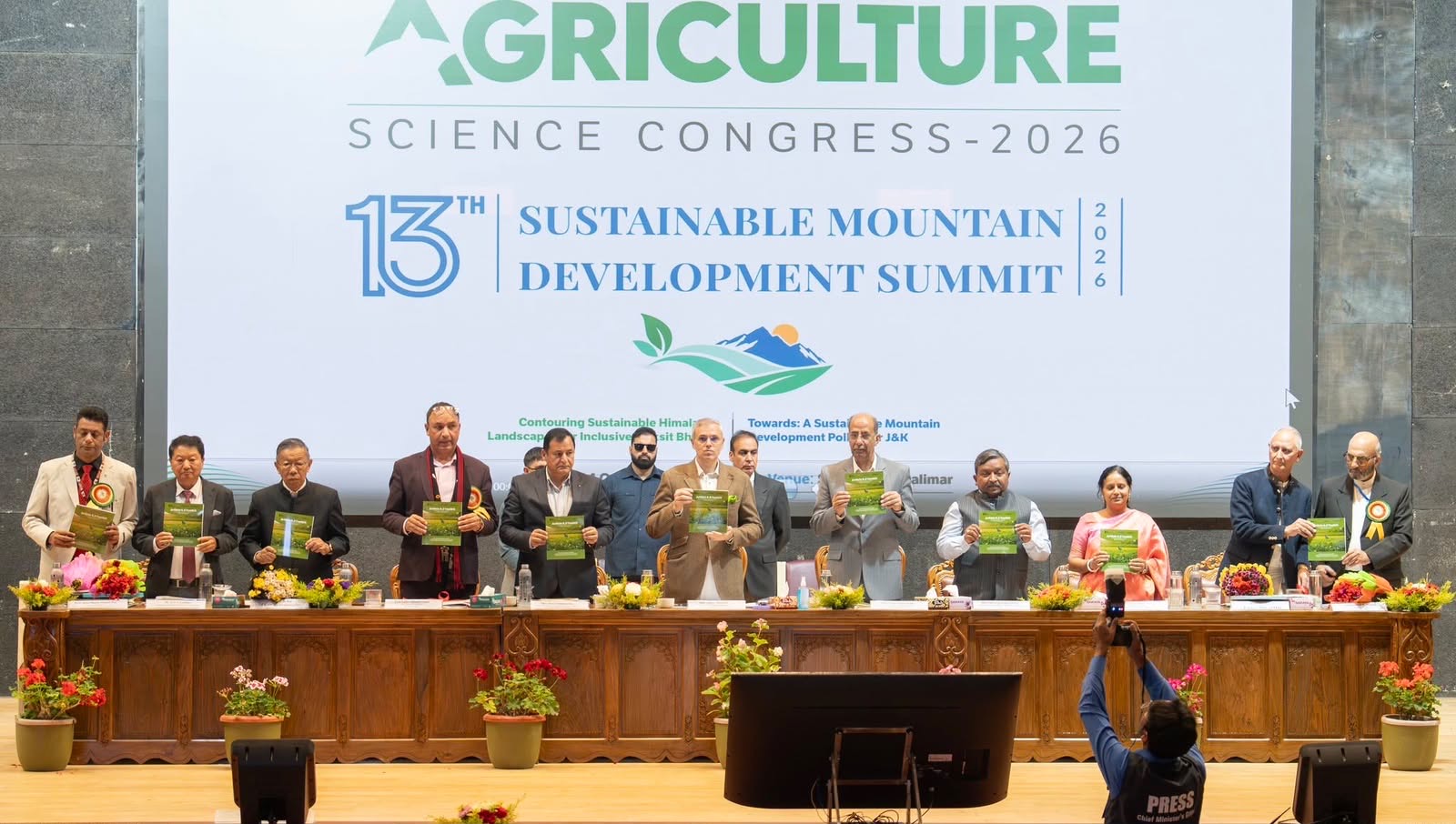
In a message to the valedictory session of the 13th Sustainable Mountain Development Summit, jointly organised by the Integrated Mountain Initiative (IMI) and Sher-e-Kashmir University of Agricultural Sciences and Technology of Kashmir (SKUAST-K), Sinha said the challenges posed by climate change, global warming, environmental degradation and unplanned development were becoming increasingly evident across the Himalayan region.
He said the protection of the Himalayan ecosystem was a matter of national importance, given its role in sustaining rivers, biodiversity and climate regulation.
“The vision of a developed India can be realised only when development and environmental protection advance together,” the Lieutenant Governor said, stressing that development achieved at the cost of environmental stability could not be considered sustainable.
Sinha said the summit had provided a platform for deliberations on water resources, forests, land, biodiversity and climate change, while highlighting the concerns of millions of people dependent on the Himalayan ecosystem.
He noted that the increasing intensity of climate-related impacts and natural disasters had made the need for preparedness and sustainable development more urgent.
Outlining the four pillars of his proposed roadmap, the Lieutenant Governor said the first priority should be science-based assessment of carrying capacity and zoning to guide development and ensure that ecological limits were respected.
The second pillar, he said, should focus on climate-resilient infrastructure and disaster preparedness through environmentally sensitive construction and stronger community-based early warning systems. These systems, he added, should combine modern technology with traditional local knowledge.
The third pillar envisages regenerative and inclusive livelihoods through high-value horticulture, organic farming, modern sericulture, eco-tourism and other green-economy activities. Sinha stressed the need to empower young people and women as entrepreneurs and job creators.
The fourth pillar calls for a zero-waste and circular mountain economy, with improved solid waste management, wastewater treatment and recycling systems in urban and rural areas as well as tourist destinations.
The Lieutenant Governor also commended the summit for preparing a draft policy addressing ecological security, responsible tourism, disaster management and sustainable livelihoods.
He expressed hope that the draft would be developed into a comprehensive policy and implementation framework through wider consultations, providing a basis for a renewed relationship between society and nature.
Emphasising India’s environmental traditions, Sinha called for combining traditional wisdom with modern science and technology while ensuring that economic growth did not undermine ecological sustainability.
He said appropriate policies and effective implementation on the ground were essential to achieving a balance between development and conservation in the Himalayan region.
2 COMMENTS
Very well presented. Every quote was awesome and thanks for sharing the content. Keep sharing and keep motivating others.


Very well presented. Every quote was awesome and thanks for sharing the content. Keep sharing and keep motivating others.
Pretty! This has been a really wonderful post. Many thanks for providing these details.