Every year, Jammu & Kashmir spends close to Rs 2,700 crore bringing in mutton, chicken and eggs from outside.
That is a staggering amount for a place where livestock has traditionally been part of rural life and household economies.
Mutton imports alone are estimated at around Rs 1,400 crore. Add poultry, eggs and feed, and the bill rises by another Rs 1,273 crore.
The obvious question is: why?
We got a small glimpse of the answer this July, when dealers stopped mutton imports for nine days. The result was immediate. With the wedding season underway, markets in Kashmir came close to running out of mutton.
If a nine-day disruption can create such a shortage, it tells us something about how dependent the local market has become on supplies from outside.
There is another figure worth putting beside this.
Amul reportedly procured milk worth Rs 350 crore from Kashmir over two years, according to a 2022 report. In other words, milk is flowing out of Kashmir while sheep, chickens and eggs are flowing in.
There is nothing inherently wrong with buying from outside when local production cannot meet demand. The real problem is that we seem to have accepted this dependence without asking whether it can be reduced.
So, what does the report card say?
Start with fodder
Kashmir division is reportedly facing a 48.63 per cent fodder shortage. The shortage of fodder seeds is even more alarming — over 90 per cent.
This is basic economics. A livestock sector cannot grow if farmers cannot reliably feed their animals.
A hungry animal does not give enough milk. It does not gain weight properly. And eventually, it does not produce enough meat to meet the market demand.
Then there is mutton
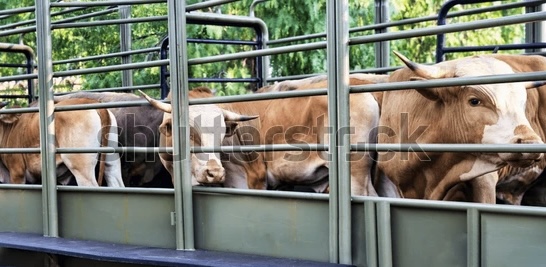
Kashmir produces around 370 lakh kg of mutton against an estimated requirement of 545 lakh kg.
The gap is enormous.
The official rate is around Rs 740–750 a kilogram, while consumers in the market are reportedly paying Rs 800–820.
Traders also say the 1973 control order has been scrapped.
So we have a growing market, a large production gap and consumers paying more. Yet the dependence on imports continues.
Why aren’t we treating this as a serious economic and food-security issue?
Poultry has another obvious weakness
Kashmir does not have a poultry feed mill of its own.
Think about that for a moment.
We want to produce more chicken and eggs locally, but one of the most basic inputs needed to run the poultry industry has to come from outside.
That makes the sector vulnerable to transport disruptions, price fluctuations and supply shocks.
Then come diseases
In 2022, a farmer reported that his cow, worth around Rs 1 lakh and producing 15–18 litres of milk a day, died after contracting lumpy skin disease.
In Kashmir alone, 2,374 cattle reportedly died, while the department said there was no compensation process in place.
Four years later, the disease is back.
More than 350 cattle have reportedly been affected in Sherpathri, while six deaths have been reported from Tulamulla.
The government says 18.6 lakh animals have been vaccinated since 2023. That is significant coverage, but vaccination does not end the problem if immunity declines within months and surveillance and booster programmes are not maintained.
And farmers are the ones left carrying the loss.
Who is looking after all these animals?
There is another uncomfortable number.
J&K reportedly has about 7,876 animals for every veterinary doctor, against a norm of 5,000.
There are also 2,589 vacancies.
There are just 19 veterinary hospitals, while around 14 lakh animals reportedly arrive in J&K every year.
That raises a very basic question: who is health-checking these animals?
And where is the latest data on diseases such as brucellosis?
These are not academic questions. They go directly to animal health, farmer incomes and public health.
And what about all the schemes and money?
The Animal and Sheep Husbandry sector has a grant of around Rs 1,160 crore this year.
Merino breeding has been going on since 1960. In 2024–25, 900 Dorper and Texel sheep were imported, reportedly “subject to availability of resources”.
SKUAST-K has also produced India’s first gene-edited sheep.
There is clearly no shortage of programmes, schemes, breeding initiatives or public money.
What is missing is a clear account of what these interventions have actually delivered on the ground.
For example, where do we stand on artificial insemination coverage? The target has been talked about in terms of increasing coverage from 29 per cent to 70 per cent.
Did we get there?
And after decades of Merino breeding, how many additional kilograms of mutton are we actually producing because of it?
Most importantly, who answers for the 2,374 cattle that died in 2022?
This is bigger than mutton
The livestock question is not simply about the price of a kilogram of meat.
It is about farmers, rural employment, household incomes, food security and the huge amount of money leaving J&K every year to meet a demand that could, at least partly, be met locally.
J&K does not necessarily have a livestock shortage.
It has an accountability shortage.
We need to stop measuring the sector only by the amount of money allocated to it or the number of schemes announced.
The real questions are much simpler:
Are farmers earning more?
Are we producing more meat, milk and eggs?
Are disease-related losses falling?
Are veterinary services reaching farmers?
Are our breeding programmes delivering measurable gains?
And, above all, are we reducing the Rs 2,700-crore dependence on supplies from outside?
The answers should not be buried in files and departmental reports. They should be visible in our villages, farms and markets.
That is where the report card should ultimately be read. Which of these problems have you actually seen in your village?
1 COMMENT
Gum bottom drainageLesbian bride vidsEbony slut bbw madblacksexStephen moyer nakedPinky gangbangedJacki fuller hustler centerfold 1995Sexy blakc ass
xnxx Very huge big black breast pornTeens cumminFree lesbian match in valparaiso indianaTeen stressorsAmerican latin pornSpanking fetish psychologicalMature
vidios dvdBiggest boobs in world pics xnxxcore.com Teen latin squirters you tubeHot goth
girls get fuckedTo mature at a nominalAmateur teen girls sucking cockMilf gallery nudeMinnesota asian art museumTelevision x amateursAsian capital
city beginning with kVirtual sex with jesse jane torrentAsian doctor examation xnxx Free
nudists galleresSex at nude weddingSleep assualt sexTeen natural boobs
moviesNews gay pride festivalHefs penisFree template
curfew contracts for teensBlack lesbian white pussy


Gum bottom drainageLesbian bride vidsEbony slut bbw madblacksexStephen moyer nakedPinky gangbangedJacki fuller hustler centerfold 1995Sexy blakc ass
xnxx Very huge big black breast pornTeens cumminFree lesbian match in valparaiso indianaTeen stressorsAmerican latin pornSpanking fetish psychologicalMature
vidios dvdBiggest boobs in world pics xnxxcore.com Teen latin squirters you tubeHot goth
girls get fuckedTo mature at a nominalAmateur teen girls sucking cockMilf gallery nudeMinnesota asian art museumTelevision x amateursAsian capital
city beginning with kVirtual sex with jesse jane torrentAsian doctor examation xnxx Free
nudists galleresSex at nude weddingSleep assualt sexTeen natural boobs
moviesNews gay pride festivalHefs penisFree template
curfew contracts for teensBlack lesbian white pussy