United Majlis-e-Ulama calls for Friday sermons on protection of Dal, Wular, Nigeen and other water bodies
SRINAGAR, SEPTEMBER 15: Protection of Kashmir’s lakes, wetlands and other natural resources should be treated as an ethical and religious responsibility, the United Majlis-e-Ulama Jammu & Kashmir (MMU) said at a major gathering of religious scholars in Srinagar on Tuesday, calling for greater public awareness against plastic and polythene use, littering, dumping of waste into water bodies and wetland encroachments.
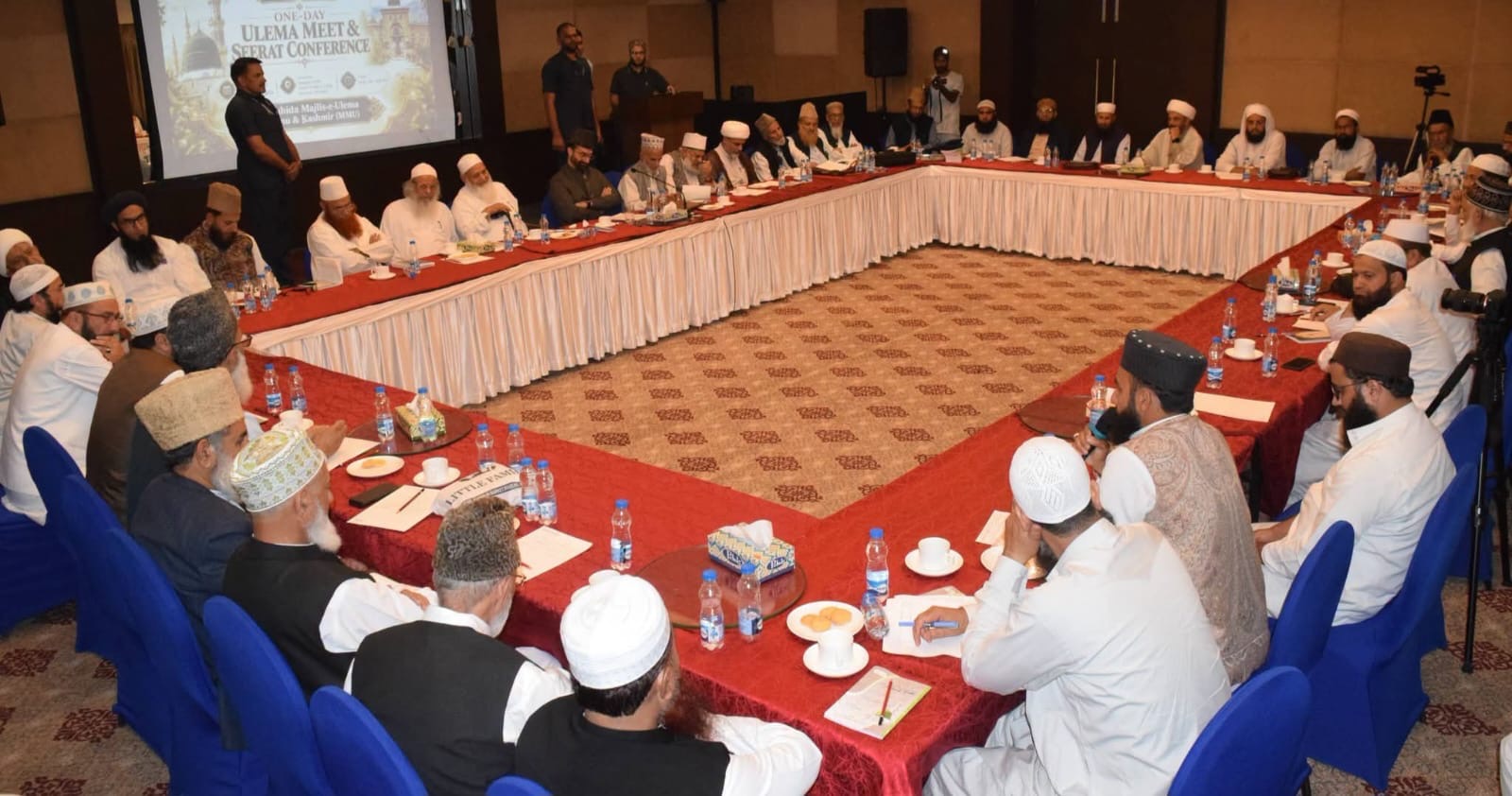
The one-day Ulama meeting and Seerat conference, held under the chairmanship of Mirwaiz Umar Farooq, adopted a resolution calling for environmental responsibility to become part of mosque-based awareness programmes and Friday sermons.
The conference expressed particular concern over the condition of Dal Lake, Wular Lake, Nigeen Lake, wetlands and other water bodies, including encroachments and their degradation, and stressed the need for their protection as shared natural resources.
The scholars said cleanliness, protection of the natural environment and safeguarding common natural resources should not be viewed only as civic or administrative responsibilities, but also as ethical and religious obligations.
Call for environmental awareness through mosques
The conference recommended that Friday sermons and mosque-based programmes be used to raise public awareness about environmental protection.
It said religious scholars could play an important role in discouraging the use of plastic and polythene, preventing littering and the dumping of waste into rivers, lakes and other water bodies, and creating awareness about the encroachment and destruction of wetlands.
The MMU also proposed a coordinated programme under which participating mosques would take up common social issues during designated Friday sermons, enabling scholars across Jammu & Kashmir and Ladakh to collectively highlight matters requiring urgent public attention and corrective action.
Two resolutions adopted
The environmental concerns formed part of a broader resolution on contemporary social challenges and the role of scholars, mosques and madrasas.
The first resolution also expressed serious concern over drug and substance abuse, suicide and self-harm, increasing mental and emotional stress among young people, irresponsible use of social media, weakening family relationships, moral decline and growing distance between young people and religious and social institutions.
Scholars call for greater support for young people
On suicide and self-harm among young people, the conference said condemnation or silence could not provide a solution.
It said scholars, mosques and madrasas could play a preventive and supportive role by creating safe environments where young people and their families could discuss mental and emotional distress, loneliness, anxiety, family pressures and other problems without fear of stigma.
The conference called upon imams and scholars to raise awareness about signs of mental distress, encourage families to respond with empathy and guide people in need towards appropriate professional counselling and mental-health support.
It said mosques and madrasas could gradually develop into accessible centres for guidance, counselling and referral, while recognising that serious mental-health conditions require trained professional care.
On drug abuse, the conference stressed that all forms of addiction are harmful and should be addressed through a consistent and sustained social policy.
District-level meetings proposed
The MMU decided to seek regular meetings, preferably every month, in different districts and areas of Jammu & Kashmir, involving local scholars, imams, mosques and madrasas.
The proposed meetings would focus on identifying local problems and developing practical responses suited to the needs of individual areas.
The conference also called for mosques and madrasas to expand their role, alongside their core religious and educational responsibilities, as centres of guidance, counselling, youth engagement, family support and social welfare.
MMU seeks sustained action beyond resolutions
Participants said that, given the serious challenges facing society, the role of scholars and religious institutions could not remain confined to formal religious matters.
They called for greater engagement with people’s everyday concerns, particularly the anxiety, pressures and aspirations of young people.
The United Majlis-e-Ulama said the conference should mark the beginning of an ongoing process rather than end with the adoption of resolutions.
It said the objective would be to translate the decisions into grassroots engagement, collective Friday sermons, district-level coordination, counselling and social-awareness programmes across Jammu & Kashmir.
Over 70 scholars participate
The conference was attended by more than 70 scholars and religious figures from Jammu & Kashmir and Ladakh.
Scholars from various districts of Kashmir participated, while religious figures from Jammu, Poonch, Rajouri, Kargil and Doda travelled to Srinagar for the meeting.
Prominent participants included Maulana Rahmatullah Mir Qasmi, Mufti Azam Nasir-ul-Islam Farooqi, Mufti Nazir Ahmad Qasmi, Mufti Muhammad Yaqoob Baba Madani, Maulana Masroor Abbas Ansari, Maulana Shaukat Hussain Kaing, Mufti Inayatullah of Jammu, Sheikh Mahboob Ali Wajdani of Kargil, Mufti Abdul Rashid Muftahi, Pir Rahmatullah Sahib, Maulana Syed Tayyab, Mufti Syed Sharif-ul-Haq Bukhari, Mufti Ejaz-ul-Hassan Bande, Mufti Zia-ul-Haq Nazmi, Mufti Pirzada Riyaz Ahmad, Maulana Adnan Nadwi, Sibte Muhammad Shabbir Qaumi, Maulana Ghulam Rasool Noori, Maulana Ali Akbar, Maulana Syed Shah Waris Shah Bukhari, Pir Iftikhar Ahmad Kamili, Mufti Taufiq Umar Nadwi, Maulana Sheikh Ghulam Muhammad, Maulana Muhammad Tahseen Qasmi, Maulana Riyaz Ahmad Qasmi, Maulana Muhammad Danish of Poonch, Maulana Pir Abdul Hamid of Qazigund, Mufti Muhammad Sultan Qasmi, Hafiz Abdul Rahman Ashrafi, Dr Kamal Farooqi, Dr Abdul Rahman War, Dr Bashir Ahmad Magray of Rajouri, Maulana Akhzar Hussain, Maulana Bashir Ahmad Usmani, Hafiz Hadith Mufti Shaukat Ahmad Qasmi, Maulana Qari Muhammad Aslam Rahimi and Majlis Secretary Maulana M.S. Rahman Shams, among others.


Quite heartening better to give Fatwa as ordained and take action against violators of the faith followers to start with abd expose in drive others who are not in the ambit of Fatwa but violators too no faith allows degradation of Environment