Chief Wildlife Warden invokes Wild Life (Protection) Act to shield Hangul, snow leopards and alpine habitats from plastic waste
Srinagar, Sept 13 — The Department of Wildlife Protection, Jammu & Kashmir, has issued a sweeping new order prohibiting single-use plastic (SUP) across all Protected Areas in the Union Territory, in a move officials say is aimed at safeguarding fragile wildlife habitats from litter, ingestion hazards and contamination.
The order, numbered 167(WC) of 2026 and dated September 7, 2026, has been notified by Dr. Suneesh Buxy, IFS, Chief Wildlife Warden of Jammu & Kashmir, under Section 33 of the Wild Life (Protection) Act, 1972. It has been titled the “Jammu & Kashmir Protected Areas (Plastic-Free) Order, 2026” and comes into force with immediate effect.
Why the order was issued
The department noted that J&K’s Protected Areas support significant populations of Hangul, Himalayan black bear, brown bear, leopard, snow leopard, musk deer, markhor, ibex and migratory birds, alongside sensitive forests, wetlands, rivers, lakes and alpine ecosystems. Unchecked plastic use, the order states, has been causing littering, entanglement and ingestion hazards to wildlife, along with contamination of soil and water and blockage of drainage channels.
The move builds on existing restrictions under the Jammu & Kashmir Non-Biodegradable Material (Management, Handling and Disposal) Act, 2007, and SRO-45 of 2017, which had already banned polyethylene carry bags, plastic sheets and multilayered packaging below 50 microns. It also draws on the national Plastic Waste Management Rules, 2016.
What is covered
The order applies across all National Parks, Wildlife Sanctuaries, Conservation Reserves and Wetland Reserves under the department’s control, extending to entry gates, tourist facilities, trekking routes, campsites, pilgrimage routes, viewpoints, water bodies and commercial establishments located within these areas.
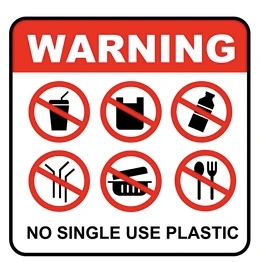
Banned items include SUP articles notified under the Plastic Waste Management Rules — plastic cutlery, plates, cups, glasses, straws, stirrers, certain wrapping and packing films, plastic flags, and ear buds with plastic sticks, among others.
Key provisions
Plastic-free entry:Visitors, tourists, pilgrims, trekkers and commercial operators will be advised or required to avoid carrying plastic into Protected Areas. The department will set up designated Plastic-Free Entry/Exit Points, with voluntary checking and collection facilities where feasible.
“Carry-in, carry-out”: A mandatory principle requiring every visitor, vendor, operator and institution to take back whatever plastic or non-biodegradable waste they bring in, rather than leaving it behind.
Commercial establishments: Hotels, dhabas, restaurants, camps, canteens and eco-tourism operators within Protected Areas are barred from selling banned SUP items, serving disposable plastic cutlery or crockery, burning or dumping plastic waste, or permitting littering on their premises. Existing licences and permits may be amended to reflect the new condition.
Water bottles: The department will progressively shift toward plastic-free drinking water arrangements at high-footfall sites, favouring refill stations, reusable or steel/glass bottles, and filtered water facilities. Where plastic bottles remain necessary, wardens may introduce a deposit-refund or take-back scheme.
Waste management plans:
Each Wildlife Warden must prepare an area-specific Plastic and Solid Waste Management Plan covering entry gates, tourist destinations, trekking routes, campsites, water bodies and pilgrim routes, with waste to be segregated and transported out for proper processing. Burning or burying of plastic waste within Protected Areas is strictly prohibited.
Enforcement and penalties
Wildlife officers and frontline staff have been authorised to detect violations and act under applicable laws. Offences may be dealt with under the J&K Non-Biodegradable Material Act, the Plastic Waste Management Rules, or the Wild Life (Protection) Act, 1972, depending on which law is engaged. Prohibited items found in violation may be seized. The order does not create a separate penalty of its own but relies on penalties already prescribed under the relevant statutes and rules.
Eco-tourism and tourism-related permits, leases and concessions issued by the department will now carry a mandatory compliance condition, with repeated violations potentially grounds for suspension or cancellation.
Awareness and coordination
The order calls for a sustained “Plastic-Free Protected Areas – J&K” awareness campaign through entry-gate signage, tourist brochures, digital and social media outreach, and engagement with hotels, schools, colleges and local communities. The department has also been directed to coordinate with the Forest Department, Rural Development Department, Urban Local Bodies, Tourism Department, the J&K Pollution Control Committee, district administrations and Panchayati Raj institutions for effective implementation. Local communities and Eco-development Committees have been encouraged to participate in plastic collection and monitoring efforts.
Wildlife Wardens have been asked to submit monthly compliance reports to their respective Regional Wildlife Wardens, and the Chief Wildlife Warden retains authority to issue further guidelines and SOPs as implementation proceeds.
The order clarifies that it does not override existing protections under the Wild Life (Protection) Act, 1972, the Environment (Protection) Act, 1986, or the Plastic Waste Management Rules, and that statutory provisions will prevail in case of any inconsistency.
Copies of the order have been endorsed to the PCCF & HoFF Jammu and Kashmir, Divisional Commissioners, all Deputy Commissioners, Regional and Wildlife Wardens, and municipal and local bodies across the Union Territory for wide publicity and implementation.


I very delighted to find this internet site on bing, just what I was searching for as well saved to fav
Khám phá 33WIN để trải nghiệm hệ sinh thái trò chơi trực tuyến phong phú với nhiều lựa chọn giải trí khác nhau. Từ những tựa game bài quen thuộc đến các nội dung thể thao đa dạng, nền tảng đáp ứng nhiều nhu cầu của người chơi. Cùng với đó là các chương trình thưởng hấp dẫn và bộ phận chăm sóc khách hàng hỗ trợ xuyên suốt 24/7.