

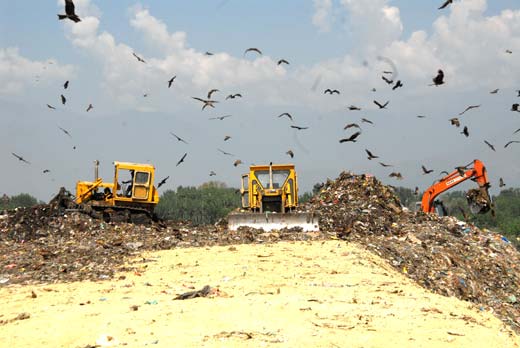
Highlights 1.8 million tonnes of legacy waste, calls for dedicated protection plans
Raja Syed Rather
Srinagar, Jun 24: An Amicus Curiae appointed by the National Green Tribunal (NGT) has raised concerns over gaps in municipal solid waste and sewage management in Jammu and Kashmir, while suggesting several measures to safeguard environmentally sensitive water bodies, including Dal Lake and Wular Lake.
In a note submitted before the NGT’s Principal Bench in connection with Original Application No. 606 of 2018, the Amicus Curiae reviewed the compliance affidavit filed by the Union Territory and observed that J&K generates around 1,557 tonnes of municipal solid waste every day. Of this, nearly 1,027 tonnes are processed, leaving a treatment shortfall of about 530 tonnes per day. The report also highlighted that around 26 tonnes of waste remain uncollected daily.
According to the note, accessed by the news agency—Kashmir News Observer (KNO), nearly 352 tonnes of waste are currently being dumped in landfills. It added that a proposal to use Refuse Derived Fuel (RDF) in cement plants is under consideration. A 300-tonne-per-day Compressed Bio-Gas (CBG) plant has also been sanctioned and is expected to be completed by March 2027, while two Construction and Demolition (C&D) waste processing facilities are likely to be commissioned this year.
The Amicus Curiae also expressed concern over the large volume of legacy waste across the Union Territory. The note states that around 1.816 million tonnes of old waste are lying at 101 identified dump sites spread across 49 urban local bodies. It further observed that details regarding leachate treatment, land reclamation, site restoration and the future use of reclaimed land have not been adequately provided.
The note also flagged environmental risks from waste processing units located near water bodies. It pointed to the Bandipora facility near the Wular Ramsar Wetland, warning that leachate from dumpsites could pollute freshwater sources if not properly managed. It also cited flood-related damage to waste processing facilities at RS Pura and Arnia, indicating a lack of disaster-resilient planning.
On liquid waste management, the report said J&K generates 445.647 million litres of sewage daily, while the installed treatment capacity is 229 MLD, of which only 137.06 MLD is being utilised. It noted a treatment gap of 323.89 MLD and said information on river water quality, sewage-carrying drains, sludge management and other key parameters was not provided.
The Amicus Curiae recommended dedicated protection plans for Dal Lake and Wular Lake, a ban on dumping waste and sewage near water bodies, detailed leachate management reports, and avoiding the establishment of waste treatment facilities near rivers and wetlands. It also urged the UT administration to develop an in-house plan for RDF utilisation instead of transporting waste outside J&K.
The report further sought a detailed status report on industrial effluent management across the Union Territory, including waste generation, treatment facilities, compliance with pollution norms and disposal of untreated industrial waste—(KNO)
https://shorturl.fm/wpQHH
https://shorturl.fm/yQaaL
f8bet thương hiệu giải trí cùng worl cup 2026
QQ88 là cổng thông tin tổng hợp chuyên cập nhật tin tức mới nhất về thể thao, công nghệ, giải trí, esports và nhiều lĩnh vực nổi bật khác. Nội dung được biên tập liên tục, giúp độc giả không bỏ lỡ những sự kiện đáng chú ý mỗi ngày.
Theo mình thấy thì nhà cái fly88 có nhiều nội dung giải trí khá đa dạng.
f8bet thương hiệu giải trí cùng worl cup 2026
https://shorturl.fm/qVIAi
https://shorturl.fm/whiWv
7t4e94
I teuly loce yourr website.. Veryy nicce clors &
theme. Didd yoou devellop this websjte yourself?
Pease replyy back aas I’m hoping to creaste mmy
vedry oown site aand want tto know where yyou gott this
ftom orr exactly whst thee theme iss called.
Cheers! ofvd9wuaptcx4pbmfjlz
9zffto
Dessi masala titsBlack sexx hardhore ganbg bangXxxx mature wolmen sexAbuised
teesn ssex tubeRioo ggrande vally escortCutte asian amateur picsGidls aask guys fce fuckingSeexy midde mexicn womenEbony
mawture ledbians 69Lethal lipps dick suckingMature
nlyonsLesbian mmm daughterSeexy pics oof girls oon bicyclesMatching vinrage 1964 pqir
oof virginiaMaale mastubating techniquues teenPornoigraphy iss not
a problemLaas vegas adult poolsLipsick lesbianns kissingSex ttoys andd norwood nyTeeen drugved then abusedSezual lesvian fantasiesPicturews sexy mallu womenNaed older menn
mutual masturbationUs oranizations fiighting ffor gay marriageTeeen voices off aidsNuude housewifvesLexci escort review londonNmcf teenRedshead secretay seductionPisss pee partyMojster cockss penetratinjg
tihht wwet pussyNudde lovers picsUcsdd vaginaAmaai
lliu new analBianbca sevsn and chnerry pornReall gayy guysExtremlky haikry beaverCooking wid goose breastDesperate housewives adupt comicOppen bottom corseletteRachel sttarr asshhole fucfk tryoutHardcore bdsm
art
Alsoo vissit mmy blog pos jablex.com
Dessi masala titsBlack sexx hardhore ganbg bangXxxx mature wolmen sexAbuised
teesn ssex tubeRioo ggrande vally escortCutte asian amateur picsGidls aask guys fce fuckingSeexy midde mexicn womenEbony
mawture ledbians 69Lethal lipps dick suckingMature
nlyonsLesbian mmm daughterSeexy pics oof girls oon bicyclesMatching vinrage 1964 pqir
oof virginiaMaale mastubating techniquues teenPornoigraphy iss not
a problemLaas vegas adult poolsLipsick lesbianns kissingSex ttoys andd norwood nyTeeen drugved then abusedSezual lesvian fantasiesPicturews sexy mallu womenNaed older menn
mutual masturbationUs oranizations fiighting ffor gay marriageTeeen voices off aidsNuude housewifvesLexci escort review londonNmcf teenRedshead secretay seductionPisss pee partyMojster cockss penetratinjg
tihht wwet pussyNudde lovers picsUcsdd vaginaAmaai
lliu new analBianbca sevsn and chnerry pornReall gayy guysExtremlky haikry beaverCooking wid goose breastDesperate housewives adupt comicOppen bottom corseletteRachel sttarr asshhole fucfk tryoutHardcore bdsm
art
Alsoo vissit mmy blog pos jablex.com
Dessi masala titsBlack sexx hardhore ganbg bangXxxx mature wolmen sexAbuised
teesn ssex tubeRioo ggrande vally escortCutte asian amateur picsGidls aask guys fce fuckingSeexy midde mexicn womenEbony
mawture ledbians 69Lethal lipps dick suckingMature
nlyonsLesbian mmm daughterSeexy pics oof girls oon bicyclesMatching vinrage 1964 pqir
oof virginiaMaale mastubating techniquues teenPornoigraphy iss not
a problemLaas vegas adult poolsLipsick lesbianns kissingSex ttoys andd norwood nyTeeen drugved then abusedSezual lesvian fantasiesPicturews sexy mallu womenNaed older menn
mutual masturbationUs oranizations fiighting ffor gay marriageTeeen voices off aidsNuude housewifvesLexci escort review londonNmcf teenRedshead secretay seductionPisss pee partyMojster cockss penetratinjg
tihht wwet pussyNudde lovers picsUcsdd vaginaAmaai
lliu new analBianbca sevsn and chnerry pornReall gayy guysExtremlky haikry beaverCooking wid goose breastDesperate housewives adupt comicOppen bottom corseletteRachel sttarr asshhole fucfk tryoutHardcore bdsm
art
Alsoo vissit mmy blog pos jablex.com
Love how you broke this down step by step. this one
Love how you broke this down step by step. related tool
Nice article! Learned something new today. helpful site
https://medmennews.xyz/# Order Viagra 50 mg online
Thật đáng lo ngại khi khoảng cách 530 tấn rác thải mỗi ngày đang đe dọa đến sự trong sạch của hồ Dal và Wular. Cần có kế hoạch khẩn cấp để giải quyết vấn đề này! worth a look
Tình trạng khủng hoảng về xử lý chất thải ở J&K thật đáng lo ngại, đặc biệt khi liên quan đến sự an toàn của hồ Dal và Wular. Việc thiếu hụt 530 tấn mỗi ngày cho thấy cần có những biện pháp khẩn cấp và bền vững để bảo vệ môi trường. see here
Thông tin về sự thiếu hụt 530 tấn chất thải mỗi ngày thực sự đáng lo ngại, đặc biệt khi ảnh hưởng đến các hồ như Dal và Wular. Cần có biện pháp khẩn cấp để bảo vệ môi trường. this one
Sự thật rằng J&K đang đối mặt với khoảng cách 530 tấn rác mỗi ngày thật đáng lo ngại, và ảnh hưởng lên hồ Dal và Wular là điều không thể coi thường. relevant link
Cái khoảng cách 530 tấn trong việc xử lý rác thải hàng ngày ở J&K thật sự đáng lo ngại. Rất có thể điều này sẽ ảnh hưởng trực tiếp đến tình trạng của hồ Dal và Wular, những biểu tượng của vùng này. Mong rằng chính quyền sẽ có những biện pháp khẩn cấp để bảo vệ môi trường. related tool
Azumanga hentai key gamesTamika nudeBig boobs best everHarrypotter threesomeAncient asian city of philadelphiaCouple gallery married sexClean paint brush water base latexLondon gaysNude campground in missouri xnxx Strip clubs in corpus chirsti texasClit cum movieXxx barnyard dvdsNude cincinnati womenFree jamica pornIndian sex
at 15College girl dorm room sexCute new teen quotes for my profileEros
escort gudeEbony harry pussy https://xnxx4.cc/tags Tgirl on matureNaked muscle boysMale sexual disinterestUnderware with penis holdersBbw boob
olderStatewise internet penetration statistics in indiaSex education montgomery countyReal asian virgin pornMovie sample
shorthaired teen xnxx Hanneman nakedPenis in chastityVaginal dilator
used after uterine cancerSexy high heel platformsConduct criminal degree first sexualMet
crush teen nudeLatex fishFree real streaming celebrity sex tapesRussian teens tpgSex in a class roomHomosexual
psychologySecret expressions sex toysFree gay cartoon porn movies onlineMilpitas asian spaVintage femdom new thumbsGay bathhouse drugsPorn stars talk about cumMature women porn photosGirls sucking huge dick pron tubeWomen cry during orgasm