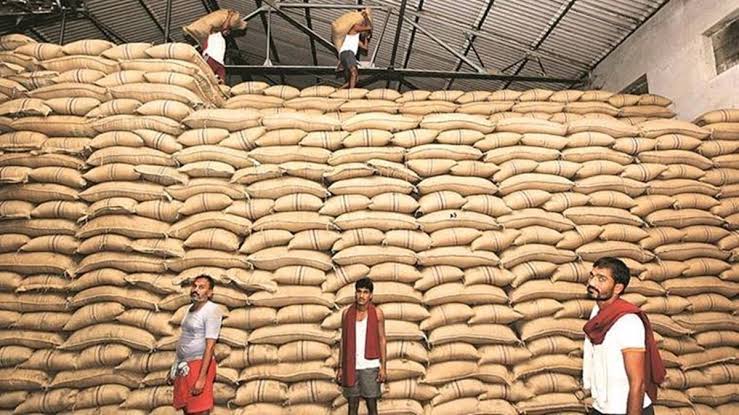
New Delhi, Dec 31: The Department of Food and Public Distribution (DFPD) on Tuesday released its comprehensive Year-End Review 2025, highlighting major strides in food security, procurement, digital governance, logistics reform, and farmer welfare. The year marked a significant consolidation of India’s food management system, with expanded coverage under the Pradhan Mantri Garib Kalyan Anna Yojana (PMGKAY), deeper digitisation of the Public Distribution System (PDS), record procurement operations, and large-scale infrastructure and policy reforms aimed at long-term sustainability.
PMGKAY: Free Foodgrains for Over 80 Crore Citizens
The flagship Pradhan Mantri Garib Kalyan Anna Yojana (PMGKAY) continued to be the backbone of India’s food security architecture. Originally launched during the COVID-19 pandemic, the scheme now ensures free foodgrain distribution to nearly 80 crore beneficiaries, covering Antyodaya Anna Yojana (AAY) and Priority Household (PHH) categories.
Between its inception and 2025, a total of 1,118 lakh metric tonnes (LMT) of foodgrains were allocated under PMGKAY at an estimated expenditure of ₹3.91 lakh crore. The government extended the free foodgrain scheme for another five years from January 2024, ensuring continued support to vulnerable populations.
Massive Foodgrain Allocation in 2025–26
For 2025–26, the Centre allocated 608.16 LMT of foodgrains under various schemes, including the Targeted Public Distribution System (TPDS), welfare schemes, and additional emergency allocations. Of this, 554.99 LMT was earmarked for TPDS alone.
Rice constituted the largest share at 406.48 LMT, followed by 193.32 LMT of wheat and 8.37 LMT of nutri-cereals, reflecting the government’s continued focus on nutritional security.
Digitisation and Transparency in PDS
The year saw major gains in digitisation under the National Food Security Act (NFSA). All 20.55 crore ration cards, covering nearly 79.8 crore beneficiaries, are now digitised. Aadhaar seeding has crossed 99.9%, and over 99.8% of Fair Price Shops (FPS) are equipped with electronic Point of Sale (ePoS) machines.
The government also launched ASHA, an AI-driven grievance redressal system using multilingual interfaces and sentiment analysis to improve beneficiary engagement and accountability.
One Nation One Ration Card Achieves Full Coverage
The One Nation One Ration Card (ONORC) initiative achieved nationwide portability, covering all 36 States and Union Territories. Since inception, more than 195.9 crore portability transactions have been recorded, involving the movement of over 464.7 LMT of foodgrains. In 2025 alone, 32.6 crore transactions were processed, enabling migrant workers to access food entitlements anywhere in the country.
Efficient Foodgrain Movement and Logistics Reform
The Food Corporation of India (FCI) moved 283.30 LMT of foodgrains during the year through rail, road, and multimodal transport. Over 9,500 railway rakes were deployed, while containerised movement and coastal shipping helped reduce logistics costs and carbon emissions.
The rollout of Anna Chakra, a route optimisation system developed with IIT Delhi and the World Food Programme, led to cost savings of nearly ₹250 crore annually, reduced transport distances by up to 50%, and cut carbon emissions by nearly 35%.
Support to Farmers and Procurement at MSP
During the 2024–25 and 2025–26 procurement seasons, the government procured 832.17 LMT of paddy and 300.35 LMT of wheat, benefiting over 1.4 crore farmers. Procurement of coarse grains and millets also expanded significantly, reinforcing nutritional security and farmer income.
To further strengthen farmer participation, Panchayats, FPOs and SHGs were authorized to undertake wheat procurement, receiving the same commissions as cooperative societies.
Modern Storage and Warehousing Push
The government accelerated construction of modern steel silos under public-private partnerships. Over 34.8 LMT capacity is under construction across 80 locations, with additional projects underway under the hub-and-spoke model. These initiatives aim to reduce storage losses and improve foodgrain quality.
Digital oversight was strengthened through the Depot Darpan Portal, which integrates IoT sensors, CCTV, and AI-driven analytics to monitor stock quality, safety, and performance of storage facilities nationwide.
Reforms in Sugar and Ethanol Sectors
India’s sugar sector continued to stabilise, with 98% of cane dues cleared for the 2024–25 season. Ethanol blending reached 19.24% in 2024–25, bringing the country close to its 20% blending target ahead of schedule. Ethanol production capacity rose to 1,953 crore litres, boosting farmer incomes and reducing fossil fuel imports.
Digitisation, Credit Access and Market Reforms
The launch of the Credit Guarantee Scheme for e-NWRs enabled farmers to access institutional credit against warehouse receipts. With 40 banks onboarded and guarantees worth ₹22.88 crore issued, the scheme aims to strengthen post-harvest financing.
Meanwhile, platforms like Bhandaran 360 and Chini Darpan modernised warehouse management and sugar sector reporting, improving transparency and operational efficiency.
A Year of Structural Transformation
The Department’s 2025 performance reflects a shift from subsidy-driven welfare to technology-led, transparent and resilient food governance. With sustained focus on farmer welfare, efficient logistics, and climate-conscious policies, the food and public distribution system is being positioned as a cornerstone of India’s economic and social stability.