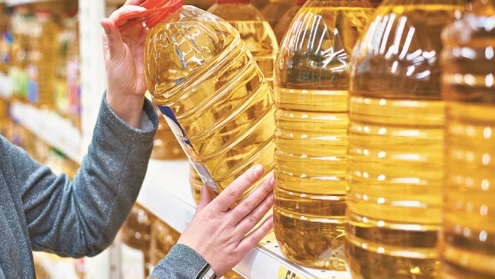
Mission targets 6.5 lakh ha oil palm expansion, 69.7 MT oilseed output by 2030–31
New Delhi: The Government of India has intensified efforts to strengthen the edible oil ecosystem under the National Mission on Edible Oils (NMEO), aiming to reduce import dependence and build self-sufficiency in oilseed and oil palm production. According to a NITI Aayog report (August 2024), India leads globally in the production of rice bran oil, castor seed, safflower, sesame and niger.
Oil Palm Expansion Gains Momentum
Under the NMEO–Oil Palm (NMEO-OP), the government has targeted bringing 6.5 lakh hectares under oil palm cultivation by 2025–26. By November 2025, 2.5 lakh hectares had already been covered, raising the country’s total oil palm area to 6.20 lakh hectares.
Crude Palm Oil (CPO) production has increased from 1.91 lakh tonnes in 2014–15 to 3.80 lakh tonnes in 2024–25. The government has set a target to raise CPO production to 11.20 lakh tonnes by 2025–26 and 28 lakh tonnes by 2029–30.
A key reform under the mission is the introduction of a Viability Price (VP) to protect oil palm farmers from global price fluctuations. Assistance for planting material has also been significantly increased from Rs 12,000 to Rs 29,000 per hectare.
Oilseed Productivity Push Under NMEO–OS
The NMEO–Oilseeds (NMEO-OS), launched in 2024, seeks to increase oilseed production from 39 million tonnes (2022–23) to 69.7 million tonnes by 2030–31 through cluster-based interventions, improved seed systems and expanded cultivation.
More than 600 Value Chain Clusters covering over 10 lakh hectares annually are being developed. Farmers receive free high-quality seeds, training on good agricultural practices, and support for post-harvest infrastructure. A digital monitoring system through Krishi Mapper and SATHI portal has been introduced for seed traceability and planning.
Import Dependence Declines Marginally
India produced 12.18 million tonnes of edible oil in 2023–24, meeting about 44% of domestic demand. Import dependence has declined from 63.2% in 2015–16 to 56.25% in 2023–24, though rising consumption continues to exert pressure on supply.
Oilseeds remain central to rural livelihoods, occupying 14.3% of India’s gross cropped area. Rajasthan, Madhya Pradesh, Gujarat and Maharashtra together contribute over 77% of national oilseed output.
Research, Seed Replacement and Farmer Support
ICAR has released 432 high-yielding varieties of nine oilseeds in the past decade. Efforts to improve varietal replacement and seed replacement rates are being stepped up through new seed hubs, storage units and breeder seed production.
To protect farmer incomes, procurement of oilseeds under PM-AASHA continues, alongside coverage under PMFBY crop insurance. Customs duties on crude and refined edible oils have been increased to curb cheap imports and support domestic producers.
Government’s Self-Reliance Push
The NMEO aims to achieve 72% of domestic edible oil demand through internal production by 2030–31. Officials said the mission is key to promoting nutritional security, reducing foreign exchange outflow, strengthening rural economies and advancing the vision of Atmanirbhar Bharat in the edible oil sector.