

Ziraat Times News
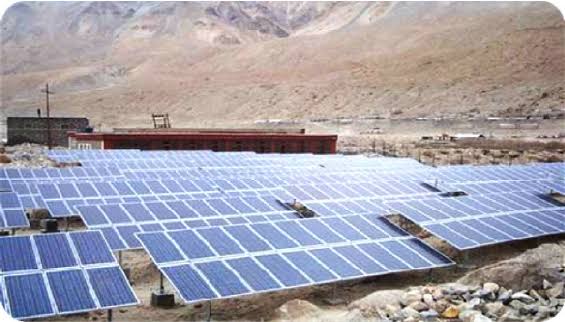
New Delhi, Dec 6: India’s solar power capacity has increased to 129 GW in 2025, pushing the share of non-fossil fuel sources beyond 50% of the country’s total installed electricity capacity, the Ministry of New and Renewable Energy (MNRE) said on Friday.
According to official data, India’s non-fossil capacity now stands at 259 GW out of roughly 500 GW of total installed power. The ministry said the rise reflects India’s rapid transition toward clean energy, supported by major national programmes and international partnerships.
The update came as part of a detailed review of India’s solar progress following the 8th Assembly of the International Solar Alliance (ISA), hosted in New Delhi in October.
Rooftop Solar and Agricultural Solarisation Gain Momentum
Under the PM Surya Ghar rooftop solar scheme, nearly 24 lakh households have adopted solar systems as of December 2025, adding 7 GW of clean energy. The government has released ₹13,464.6 crore in subsidies so far.
In the agriculture sector, the PM-KUSUM scheme has enabled the installation of about 9.2 lakh standalone solar pumps under Component B. Under Component C, 10,535 grid-connected pumps have been solarised and 9.74 lakh feeder-level pumps covered, the ministry said.
Solar Parks Expanded to 40 GW Across 13 States
As of 31 October 2025, 55 solar parks with a sanctioned capacity of nearly 40 GW have been approved across 13 states. Of these, 14,922 MW has been commissioned, while the remainder is under implementation. The scheme has been extended until March 2029.
Domestic Manufacturing Boost Through PLI Scheme
The Production Linked Incentive (PLI) scheme for solar PV modules has attracted investments of up to ₹52,900 crore as of September 2025, creating around 44,400 jobs, according to MNRE. Letters of Award have been issued for 48,337 MW of integrated and partially integrated manufacturing capacity.
India’s Position in Global Renewable Rankings
Citing IRENA’s Renewable Energy Statistics 2025, the government said India ranks:
-
3rd in solar energy
-
4th in wind energy
-
4th in total renewable energy capacity
Policy Roadmap Under Panchamrit
The ministry reaffirmed India’s climate commitments announced under the Panchamrit framework at COP26, including:
-
achieving 500 GW of non-fossil electricity capacity by 2030,
-
reducing emissions by 1 billion tonnes by 2030,
-
cutting carbon intensity by 45% from 2005 levels, and
-
achieving net-zero emissions by 2070.
Comments are closed.