

Ziraat Times Team Report
New Delhi: The government has announced major labour reforms through the Occupational Safety, Health and Working Conditions (OSH) Code), 2020, consolidating 13 central labour laws into a single comprehensive legislation. Officials say the move aims to simplify compliance, enhance worker welfare, and create a more transparent and business-friendly environment across India’s workplaces.
The Code reduces the previous 620 sections under multiple Acts to 143, cuts rules from 868 to 175, and replaces six registrations, four licences, 55 forms and 21 returns with just one registration, one licence, 20 forms and a single return. It also introduces new provisions such as compounding of offences and improvement notices.
Government sources said the reforms seek to strike a balance between safeguarding worker rights—health, safety, welfare—and enabling industrial growth and employment generation, making India’s labour market “more efficient, fair and future-ready.”
Key Changes in Worker Welfare and Employment Conditions
Formalisation Through Appointment Letters
Every employee will now receive a formal appointment letter detailing designation, category, wages, and social security entitlements. This is intended to increase transparency, minimise disputes, and improve job security.
Easier Eligibility for Annual Paid Leave
Workers will now qualify for paid leave after 180 days of work in a calendar year, instead of the earlier 240-day requirement. Officials say this enhances rest and recovery and supports higher productivity.
Working Hours, Overtime and Flexibility
The Code maintains an 8-hour workday and 48-hour workweek, with governments empowered to fix intervals and spread-over limits. It allows flexible work arrangements such as:
-
Up to 12 hours/day in a 4-day week
-
9.5 hours/day in a 5-day week
-
8 hours/day in a 6-day week
Overtime limits, previously fixed at 75 hours per quarter, can now be set by state governments. Workers will continue to receive double wages for overtime, with reforms framed as both “pro-worker and pro-employment.”
Expanded Definition of Inter-State Migrant Workmen
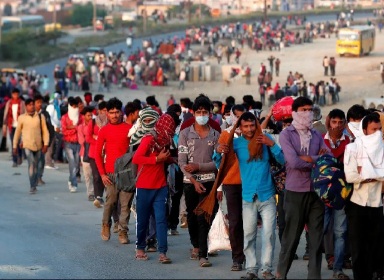
The Code now includes workers employed directly, through contractors, or those migrating independently. Employers must disclose the number of ISMWs during registration.
ISMW benefits include:
-
Annual to-and-fro journey allowance to home state
-
Portability of benefits under BOCW Cess Fund and PDS
-
Toll-free helpline access for grievances
National Worker Database
The Labour Ministry is developing a national database to register unorganised and migrant workers, enabling skill mapping, job access, and improved policymaking.
Victim Compensation
Courts can now direct that at least 50% of fines imposed for violations causing serious injury or death be paid to victims or legal heirs.
Recognition for Journalists and AV Workers
Definitions have been expanded to include:
-
Digital and electronic media journalists
-
Audio-visual workers including dubbing artists and stunt persons
These groups now receive formal legal protections for workplace safety and welfare.
Health, Safety and Well-Being Measures
Mandatory Safety Committees
Safety committees are now compulsory in:
-
Factories with 500+ workers
-
BOCW establishments with 250+ workers
-
Mines with 100+ workers
These committees will have employer and worker representatives.
Universal Coverage
The Code extends health, safety and welfare provisions to all sectors, beyond the seven sectors (factories, mines, plantations, bidi-cigar, docks, BOCW, motor transport) covered earlier.
Free Annual Health Check-Ups
All employees will receive free yearly medical check-ups. Plantation workers can now access ESIC medical benefits.
Single National OSH Advisory Board
Six earlier boards have been replaced by one tripartite National Occupational Safety and Health Advisory Board to frame uniform national standards that states must follow.
Social Security Fund
A new Social Security Fund will support unorganised workers, funded partly from penalties and composition amounts.
Ease of Doing Business and Industry Facilitation
Universal Coverage and Hazardous Work
Governments may extend the Code to any establishment with even one employee if it undertakes hazardous work, ensuring broad worker protection.
Single Electronic Registration and Licensing
A uniform threshold of 10 employees now requires one consolidated electronic registration in place of six earlier registrations. A single all-India licence will be valid for five years, with deemed approvals to reduce delays.
Revised Factory Thresholds
Factory licensing thresholds have been raised:
-
From 10 to 20 workers with power
-
From 20 to 40 workers without power
Time limits have been fixed:
-
30 days for factory construction/expansion permissions
-
30 days for the site appraisal committee to review hazardous factories
Officials say this will benefit MSMEs and promote employment formalisation.
Inspector-cum-Facilitator System
A “facilitator” approach and randomised web-based inspections aim to reduce the traditional “inspector raj,” promote transparent compliance, and ensure fair enforcement.
Third-Party Audits
Start-ups and eligible establishments can opt for third-party audits to improve safety compliance without direct inspector intervention.
Digitisation
The number of registers maintained by establishments is reduced from 84 to just 8, significantly lowering administrative burden.
Revised Contract Labour Regulations
Clear Definition of Core and Non-Core Activities
Employers may hire contract labour even in core activities if:
a) the activity is ordinarily performed through contractors
b) the activity does not require full-time workers
c) there is a sudden surge in workload
This is expected to increase clarity and flexibility for both workers and employers.
Higher Threshold for Applicability
The contract labour applicability threshold has been raised from 20 to 50 workers. Contractors employing fewer than 50 workers will no longer need a licence, easing burdens on small contractors.
Welfare and Wage Protection
Principal employers are responsible for health and safety facilities for contract workers and must pay wages if contractors fail to do so.
Compounding, Decriminalisation and Compliance Reform
Compounding of Offences
For the first time, offences punishable with fines can be compounded at:
-
50% of maximum fine for fine-only offences
-
75% of maximum fine for offences with fine or imprisonment
Comments are closed.