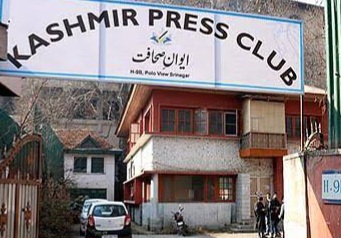
Srinagar: The Press Club of Kashmir (PCK) has welcomed the recent guidelines issued by the Jammu & Kashmir Department of Information and Public Relations (DIPR) aimed at preventing impersonation and curbing the activities of unqualified and self-styled individuals posing as journalists.
In a statement issued on Friday, the President of the Press Club of Kashmir, Mohammad Saleem Pandit, appreciated the government’s decision, terming it “a step in the right direction to safeguard the dignity and credibility of journalism.”
Mr. Pandit said the DIPR’s directive to district-level officers to maintain vigilance against fake and uneducated individuals masquerading as journalists will help check blackmail, extortion, coercion of officials, and the spread of defamatory and unverified information targeting public institutions, officers, and private citizens.
The Press Club of Kashmir has already moved the Jammu and Kashmir High Court seeking the fixation of minimum educational qualifications for journalists. “We have prayed for a writ of mandamus directing the government to make graduation—preferably in Mass Communication—the minimum qualification for journalists and photojournalists,” Mr. Pandit said. “The Hon’ble High Court has admitted the petition and issued a notice to the UT government to formalise the modalities for setting such qualifications to curb misuse of the right to expression under Article 19(a).”
Mr. Pandit also confirmed receiving a communication from the Labour Commissioner seeking details of all working journalists in the Valley to facilitate provision of old-age pension benefits to those who have served at least 20 years in the field.
Welcoming the DIPR’s latest order, the PCK President said the directive empowers all District Information Officers (DIOs) to ensure greater scrutiny and maintain updated lists of accredited and bona fide media professionals in consultation with the Directorate of Information and media organisations.
The order also instructs that official press releases, media invites, and briefings be shared only with verified and recognised journalists or media outlets through authorised communication channels. DIOs have further been asked to report instances of individuals or entities misusing media credentials or attempting to malign officials or institutions for personal or financial gain.
“It is heartening to note that one of the longstanding demands of the Press Club has been partially fulfilled,” Mr. Pandit remarked. He lauded the directive advising editors and media houses to exercise due diligence while hiring correspondents, freelancers, or stringers, ensuring they are qualified, credible, and properly verified.
Zulfikar Majid, General Secretary of the Press Club of Kashmir, endorsed the president’s statement and reiterated the Club’s commitment to maintaining professional standards and ethical journalism in Jammu and Kashmir.