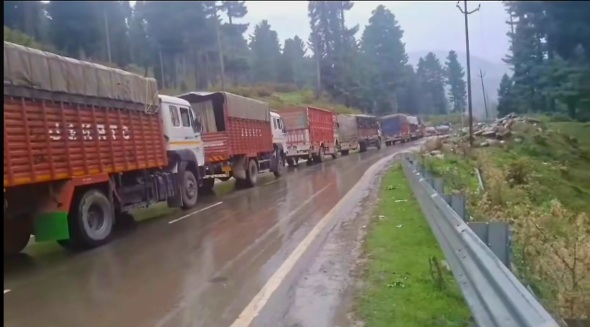
Srinagar: Truck drivers ferrying fruit out of Kashmir have found themselves in a desperate situation as the closure of NH44 continues and pressure mounts to divert through Mughal Road, which is unfit for heavy trucks.
Several truck drivers contacted Ziraat Times and said they are stranded for nearly a week on NH44, incurring rising personal and operational costs. According to drivers, Baparis (commission agents) at mandis are pressing them to attempt the Mughal Road, despite the fact that the route is unsuitable for 10-wheel trucks and difficult even for 6-wheel carriers. Insurance coverage is unavailable for vehicles taking the Mughal Road, further compounding the risk, they maintain.
“Some baparis are forcing us to move through Mughal Road. But that road is not safe for our vehicles. If the truck breaks down, or if fruit is damaged, who will bear the loss? We are already in huge losses,” Nazir Wagay, a driver stranded near Ramban, told Ziraat Times over the phone.
Truckers point out that even when fruit trucks manage to reach mandis, multiple charges cut into their earnings—including repeated loading and unloading fees, tolls, local taxes, and mandatory mandi entry fees of around ₹500. Additionally, they face weight-related penalties and mounting daily expenses while stranded.
Many drivers say they are now unable to recover even the operating costs of transporting fruit consignments. “We are caught between road blockages, baparis’ pressure, and rising expenses. We are simply unable to make ends meet,” Fareed Ahmed, another driver told Ziraat Times.
In response to the growing crisis, truck drivers have started demanding exemption from mandi entry and exit fees, as well as toll charges, until the highway situation improves. They argue that these relief measures are necessary to prevent further financial collapse among transporters who are already under strain.
The plight of fruit truck drivers adds another layer of concern to Kashmir’s horticulture sector, which is already reeling under massive losses due to transport disruptions during the peak fruit season.