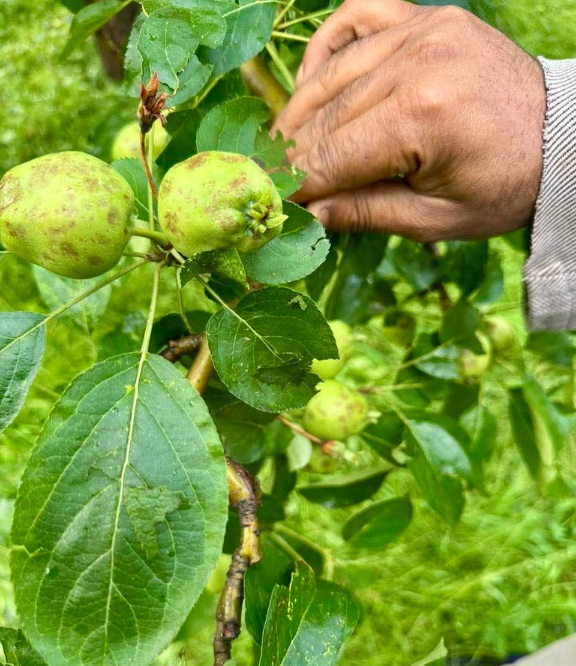
Srinagar: Another devastating hailstorm swept through several parts of South Kashmir on Tuesday, inflicting widespread damage on apple and cherry orchards across the region.
The affected areas include Nagbal, Dachoo, Hoomona, Wadipora, Drawani, Handew, Darshalin, Alshipora, and Bandpava, where fruit growers have suffered extensive crop losses. In Shopian district, severely affected villages are reported to be Alishipora, Handew and Hushanpora.
The hailstorm, which struck unexpectedly in the afternoon, battered hundreds of acres of orchards, leaving fruit trees stripped and produce damaged. With cherry harvests already underway and the apple crop in a critical growth stage, the losses are being described by local farmers as “catastrophic.”
“This is our main source of income. The storm lasted only a few minutes but ruined an entire season’s labour,” said Mushtaq Ahmad, an orchardist from Nagbal. Similar stories were echoed across the affected belt, where growers estimate that nearly 60–70% of the standing crop has been lost.
Growers are now urging the Jammu & Kashmir Government to immediately assess the damages and offer timely relief. They have reiterated their long-pending demand for the inclusion of fruit crops like apple and cherry under a comprehensive Crop Insurance Scheme, which would protect them from frequent weather-related shocks.
“Natural calamities like hailstorms are beyond our control, but the lack of government-backed crop insurance leaves us helpless every single time,” said Ghulam Rasool, a farmer from Wadipora.
In addition, farmers are calling for anti-hail nets to be made available at subsidised rates, so they can take preventive measures in the future. “We can’t afford to buy these nets at current market prices. The government must support us if it wants to protect this vital sector of Kashmir’s economy,” said Fayaz Lone, a cherry grower from Bandpava.
The horticulture sector is the backbone of Kashmir’s rural economy, employing lakhs of people and contributing significantly to household incomes. With climate change increasing the frequency of extreme weather events, stakeholders stress that risk mitigation measures are no longer optional.


Comments are closed.