


Srinagar: Amid freezing winter conditions in South Kashmir on Saturday, with normal temperatures usually ranging between minus 8°C and minus 2°C, residents of several villages reported on social media an unusual and sudden surge in warmth on Saturday. The phenomenon was observed in several villages including Godool, Nandigram, and Daksum in Anantnag, as well as D.H. Pora and Nandimarg in Kulgam.
As previously reported by Ziraat Times, there were several speculations about what the root cause of this strange phenomenon was. We reached out to Prof Shakeel Romshoo, an eminent earth sciences scientist, and vice- chancellor of Islamic University of Science and Technology (IUST) to have his expert views on what could have actually happened.
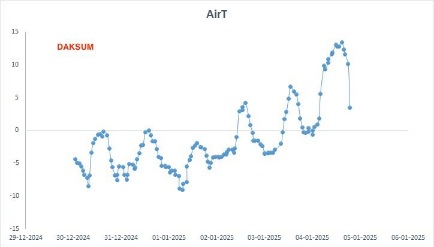
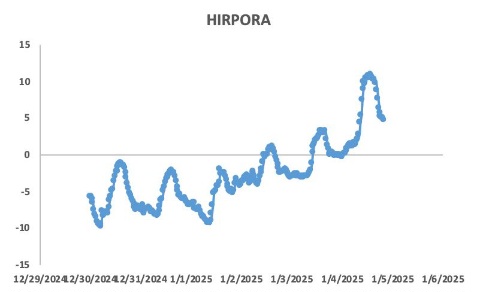
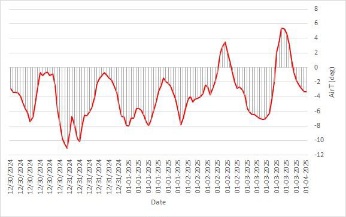
Citing the data recorded at several observatories installed across South Kashmir, like Daksum, Hirpora, Matigawran and IUST, Awantipora, here is what Prof Romshoo says about this phenomenon –
“Intense warm-air advection over parts of South Kashmir caused a rapid increase in temperature and significant snowmelt on the afternoon of January 4th.
Contrary to speculations and rumours on social media, this phenomenon is unrelated to volcanic, tectonic, or hot spring activity in the region.
 The air-mass transformation led to a strong surface-based temperature inversion, which often contributes to dense fog. Combined with warm-air advection, usually associated with Western Disturbances, these atmospheric processes increased heat flux from the atmosphere, raising surface temperatures by an average of 10°C in a single day in some parts of South Kashmir.
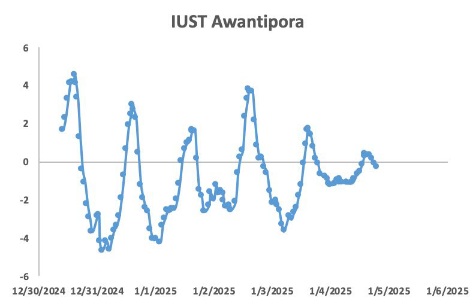
Data from our South Kashmir observatories indicate that the warm-air advection began on January 2nd and peaked today. Here are the temperature profiles of Daksum, Matigawran and Hirpora in South Kashmir which reflect warm-air advection.
Comments are closed.